Bathroom clutter has a way of making even the nicest spaces feel cramped and disorganized. Towels, toiletries, cleaning supplies, and medications pile up fast, and when there’s nowhere to stash them, your bathroom loses its calm. A bathroom linen storage cabinet solves this problem directly, it tucks away the everyday essentials you need close at hand while keeping counters and corners clear. Whether you’re working with a small powder room or a sprawling master bath, the right cabinet can shift your entire bathroom’s functionality and appearance. In 2026, storage solutions go beyond basic functionality: they’re about smart design that fits your lifestyle and your walls.
Table of Contents
ToggleKey Takeaways
- A bathroom linen storage cabinet eliminates clutter while keeping essentials accessible, making bathrooms feel more spacious and organized for daily routines.
- Wall-mounted and freestanding cabinets offer different benefits: wall-mounted units save floor space with recessed or surface-mounted options, while freestanding cabinets provide flexibility and easier installation for renters.
- Proper cabinet selection depends on measuring your space, assessing storage needs, and choosing moisture-resistant materials like engineered wood or metal finishes that withstand bathroom humidity.
- Budget-friendly options start at $100–$200 for basic units, with mid-range cabinets ($250–$400) delivering the best balance of durability and design value.
- Rolling towels vertically saves 30% more space than folding, and grouping items by type with shelf dividers creates a functional, intentional bathroom linen storage system.
- Secure installation with a stud finder and level, combined with regular organization and rotation of stock, ensures your cabinet performs safely and looks intentional for years.
Why Bathroom Linen Storage Cabinets Matter
A bathroom linen storage cabinet isn’t a luxury, it’s a practical anchor point for daily life. Most bathrooms lack counter space, and piling bottles, towel stacks, and first-aid supplies on shelves creates visual noise and makes cleaning harder. A dedicated cabinet keeps everything in one spot, reducing the mental load of “where did I put that?”
Beyond aesthetics, proper storage extends the lifespan of your linens and products. Towels stay fresher when rolled and stacked vertically rather than compressed in a corner. Cleaning supplies stay organized and accessible, reducing duplicates you’d otherwise buy. A well-organized bathroom also improves daily routines, everyone in the household knows where to find what they need.
From a home value perspective, bathrooms are one of the first places buyers and guests notice. Organized, clean bathrooms feel more spacious and intentional. A cabinet investment often pays off in perceived quality, even if it’s a modest $200 wall-mounted unit versus leaving everything scattered across shelves.
Types Of Bathroom Linen Storage Cabinets
Wall-Mounted Cabinets
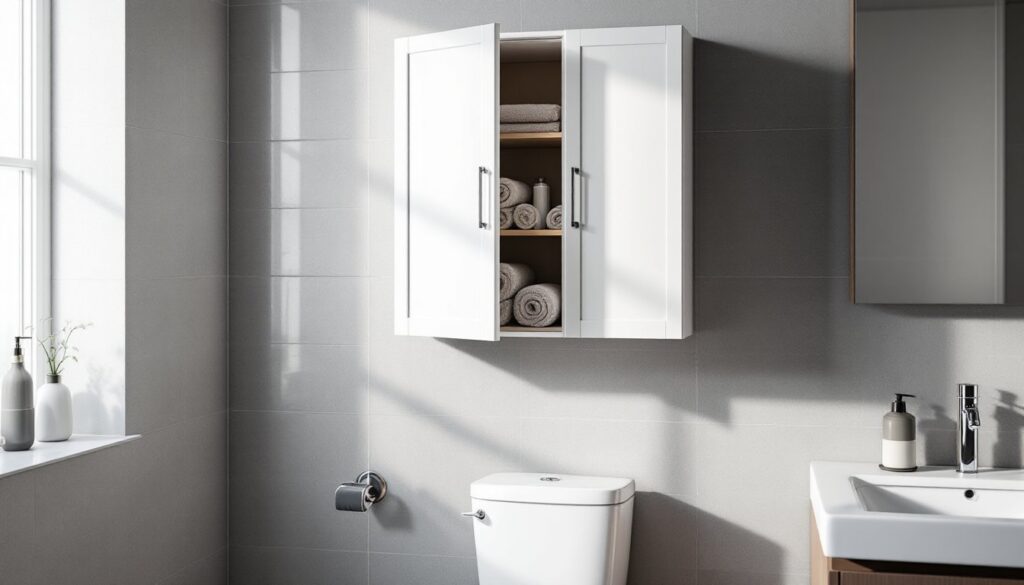
Wall-mounted cabinets are the go-to choice for bathrooms where floor space is at a premium. They’re installed directly into wall studs (or with appropriate anchors) and sit anywhere from 12 to 60 inches above the floor, depending on your layout and reach. These come in recessed and surface-mounted versions.
Recessed cabinets sink into the wall cavity between studs, flush with the wall surface. They require you to identify a stud location and cut an opening between studs. This is ideal if you have plumbing or electrical on the opposite wall, but you’ll need to identify what’s behind the wall before cutting. Surface-mounted cabinets attach directly to the wall face and don’t require wall surgery, they’re faster to install and work in any location, though they do protrude slightly. Both options typically range from 18 to 36 inches wide and 24 to 36 inches tall.
Freestanding Units
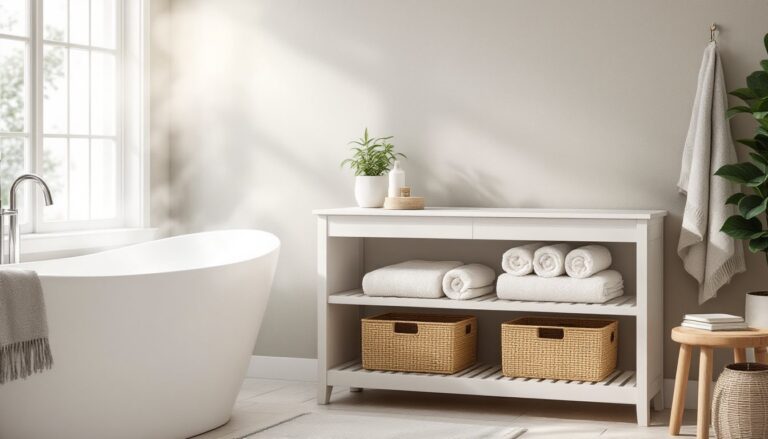
Freestanding cabinets sit on the floor or on legs and require no wall installation. They’re perfect for renters, for bathrooms where wall mounting isn’t practical, or if you want flexibility to rearrange. These units come in multiple footprints: narrow towers (around 12–18 inches wide), standard cabinets (24–30 inches), and corner units designed to maximize awkward spaces.
The trade-off is floor space. A freestanding cabinet claims real estate, which matters in tight bathrooms. But, they’re easier to move if you renovate or redecorate, and you won’t damage walls or studs during installation. Material variety is wider too, you’ll find engineered wood, solid wood, metal frames with shelves, and even vintage or repurposed options.
How To Choose The Right Cabinet For Your Space
Start by measuring your bathroom’s dimensions and identifying where a cabinet will fit. Note window locations, electrical outlets, and doorswings, a cabinet shouldn’t block a door or make the room feel even tighter. Measure the wall or floor space in inches, then look at cabinet widths and depths in the specifications.
Consider what you’re actually storing. Rolled towels need height: bottles and jars need shallow shelves: cleaning supplies need accessible depth. Count your linens and products to estimate how much capacity you need. A family of four may need more capacity than a single person, and guest towels might require dedicated space.
Material and finish should match your bathroom’s style and moisture level. Bathrooms see humidity and temperature swings, so cabinets need moisture-resistant materials. Solid wood requires more maintenance in humid climates: engineered wood with polyurethane finishes or painted finishes hold up better with minimal care. Metal and ceramic finishes resist moisture naturally. If your bathroom has poor ventilation, lean toward materials that won’t swell or warp, or install an exhaust fan to reduce humidity before buying.
Budget varies widely. Basic freestanding units start around $100–$200: solid wood or designer finishes can run $500–$1,500. Wall-mounted recessed cabinets typically cost more due to installation complexity. Mid-range options in the $250–$400 range often deliver good durability and design without over-investing. For a fresh look and curated options, Remodelista features thoughtful bathroom storage designs worth browsing. If you’re leaning DIY, Ana White offers free plans for custom bathroom cabinets you can build yourself.
Installation And Organization Tips
Wall-mounted cabinet installation requires finding studs with a stud finder (non-negotiable, you need to anchor into solid wood, not drywall). Mark stud locations with a pencil, then hold the cabinet against the wall and mark mounting holes. Pre-drill holes to prevent wood splitting, then drive screws or bolts depending on the cabinet’s hardware. Use a level to ensure the cabinet sits straight: even slightly tilted cabinets look off and may not close properly. If you can’t locate studs where you want the cabinet, use toggle bolts or heavy-duty drywall anchors rated for the cabinet’s weight, but understand these won’t support heavy loads the way studs do.
Freestanding cabinet placement is simpler: place it in your chosen spot, level it using shims if needed, and secure it to the wall with a safety strap if you have small children or live in an earthquake-prone area. Shifting cabinets are safety hazards.
Once installed, organization makes the difference between looking neat and feeling functional. Group like items together: all towels in one section, cleaning supplies in another, medications in a locked drawer if you have kids. Use shelf dividers or small bins to prevent stacks from toppling. Label shelves if multiple people share the bathroom. Roll or fold towels consistently, rolled towels save 30% more space than folded ones and look more intentional.
Rotate stock regularly (towels, linens, seasonal items) so nothing sits unused in the back. Check expiration dates on medications and cleaning products quarterly. For shower storage and daily to create a cohesive, organized look throughout the entire space.
If your bathroom is particularly tight, vertical storage is your friend. Tall, narrow cabinets or wall-mounted units above the toilet use otherwise wasted vertical space. Consider a 20-inch-wide freestanding cabinet in white engineered wood as an example of a compact option that fits most bathroom layouts without overwhelming the space.
Conclusion
A bathroom linen storage cabinet transforms clutter into calm. Whether you choose a wall-mounted unit for a space-saving approach or a freestanding cabinet for flexibility, the key is matching the cabinet to your actual needs, your bathroom’s moisture levels, and your style. Measure carefully, install securely, and organize intentionally. The result isn’t just a cleaner bathroom, it’s one that works harder for your daily life.