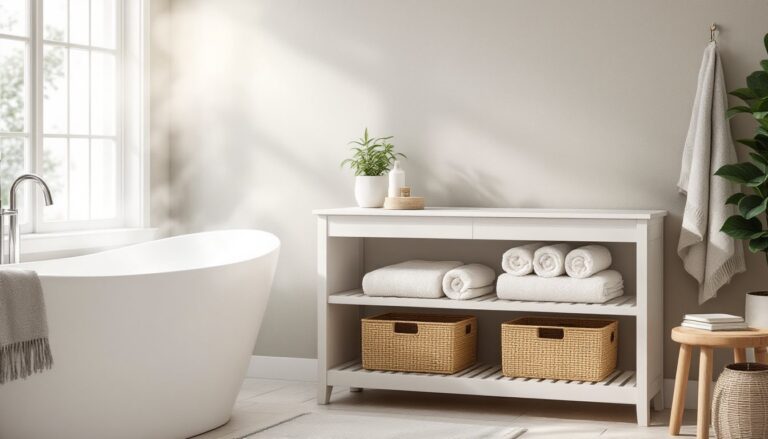
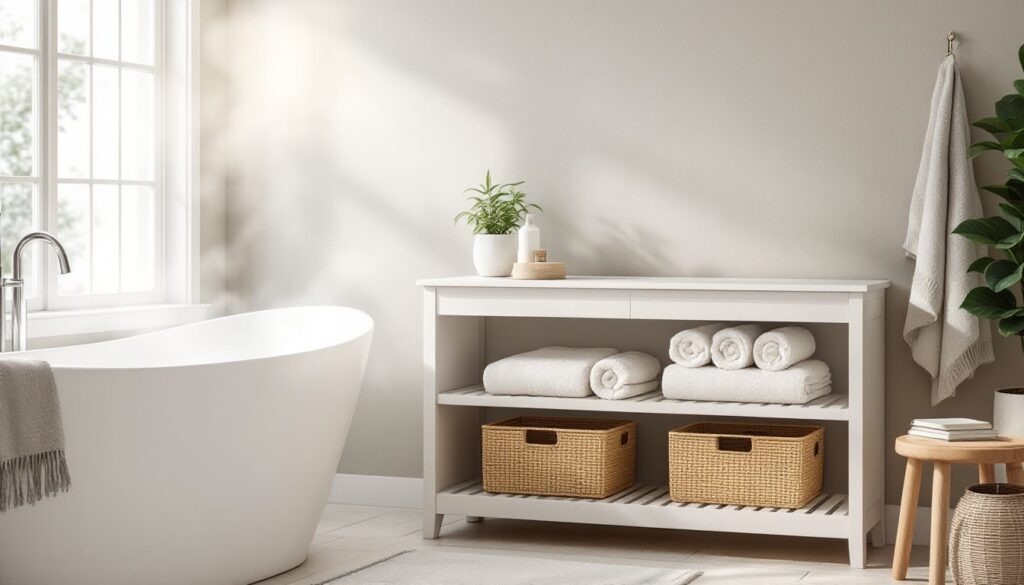
Bathroom benches with storage have become essential pieces in modern homes, combining seating comfort with practical organization in one compact footprint. Whether you’re working with a sprawling master bath or a tight powder room, a well-chosen storage bench transforms how you use the space, keeping towels, linens, and bath supplies within arm’s reach while adding visual depth and character. This guide walks you through the options available, how to pick the right fit for your layout, and the installation and styling strategies that maximize both function and aesthetics.
Table of Contents
ToggleKey Takeaways
- Bathroom benches with storage solve dual problems by providing organized storage for towels and bath supplies while adding functional seating and visual character to any bathroom layout.
- Choose between open-shelf designs for an airy, accessible look or closed-door benches to hide clutter, depending on your bathroom’s humidity levels and your personal tidiness habits.
- Measure your space carefully (typically 36–60 inches wide, 14–18 inches deep) and select moisture-resistant materials like solid hardwood or sealed plywood if the bench will sit near water sources.
- Proper installation on wall studs or with appropriate anchors prevents tipping, while acclimating solid wood to your bathroom’s humidity for 24 hours prevents warping and extends the bench’s lifespan.
- Apply the “rule of thirds” when styling—fill one-third with functional items, one-third with decorative objects, and leave one-third open to create a balanced, uncluttered appearance.
- Most bathroom benches cost between $150–$800 and offer excellent resale appeal, making them a smart investment that pays off through daily usability and home value.
Why Bathroom Benches With Storage Are Worth the Investment
A bathroom bench with storage solves a problem most homeowners face: where to put things. Towel racks fill fast. Under-sink cabinets get cluttered. Floating shelves work, but they expose everything to moisture and dust. A storage bench sits against a wall or at the foot of a bathtub, keeping items both organized and protected while adding seating that’s useful during grooming routines or when someone needs a moment to themselves.
Beyond function, these pieces anchor a bathroom’s visual identity. They provide texture, warmth, and a sense of intentional design that mirrors and light fixtures alone can’t deliver. A solid wood bench with open shelving reads differently than a sleek, closed-storage box, both are valid, but they set different moods. And because bathroom real estate is premium, choosing a piece that pulls double or triple duty makes financial and practical sense.
Storage benches also accommodate different life stages. Young families benefit from the storage during bath time: empty nesters appreciate the additional seating when guests visit. If you’re renovating, adding a bench during construction is more straightforward than retrofitting one later. The upfront investment, typically $150 to $800 depending on materials and size, pays off in daily usability and resale appeal.
Types of Bathroom Storage Benches and Their Best Uses
Open-Shelf and Tiered Designs
Open-shelf benches feature a seating surface on top with visible shelving below, making items accessible and easy to style. These work best in bathrooms with good ventilation and regular tidying habits, since contents stay visible to guests and dust settles on exposed surfaces. Popular materials include solid wood (teak, cedar, or pine), woven baskets on metal frames, and slatted designs that encourage air circulation, crucial for moisture-prone environments.
A tiered open bench is especially useful in smaller bathrooms. By stacking shelves at different heights, you maximize storage without eating floor space. Place rolled towels on the bottom shelf, bath salts and bottles on the middle, and a decorative plant on top. This visual arrangement prevents the “stuffed closet” look and keeps frequently used items at eye level. Open designs also work well near windows or in rooms where humidity is managed with ventilation fans.
Closed Storage and Concealed Options
Closed-door or fully enclosed benches hide contents entirely, making them ideal if your bathroom tends toward chaos or moisture buildup. Think of these as low cabinets with a bench top, pull handles or soft-close mechanisms keep everything tucked away. Materials like plywood with veneer, solid wood frames with panel doors, or even moisture-resistant composite materials resist humidity better than open alternatives when sealed properly.
A closed bench also works as a statement piece. Painted finishes (satin or semi-gloss paint rated for bathrooms) withstand moisture and daily contact. A dark, neutral tone pairs with virtually any décor: a bold color becomes a design anchor. Consider whether you want a lower profile bench (12–16 inches high) for a visual float effect, or a taller option (18–20 inches) that doubles as extra counter space. Internally, divide the cabinet with adjustable shelves so you can customize storage depth for towels, cleaning supplies, or backup toilet paper.
How to Choose the Right Bathroom Bench for Your Space
Start by measuring your wall or floor space. A typical bathroom bench runs 36 to 60 inches wide (standard door openings are 32 inches, so shipping isn’t always a problem, but fitting through bathrooms can be). Depth usually ranges from 14 to 18 inches: shallower benches fit snugly against toilets or tub edges without blocking movement. Height matters too, 16 inches is standard for seating comfort: taller benches can obstruct sightlines in compact bathrooms.
Next, consider moisture and ventilation. Bathrooms aren’t uniform: a bathroom with an exhaust fan running during showers stays drier than one without. If your bench will sit near a tub or shower, choose materials designed for splash zones: solid hardwood (teak resists moisture naturally), sealed plywood, metal frames with removable woven baskets, or engineered wood with waterproof finishes. Avoid particle board or unfinished softwoods unless the bathroom is exceptionally dry, they swell and deteriorate quickly when exposed to humidity.
Style and storage capacity are intertwined. Open shelves display pretty towels and decorative baskets but require maintenance and intentional styling. Closed doors hide mess but can make small bathrooms feel boxed in. Be honest: do you tidy up before guests arrive, or does your routine involve a last-minute shove? Your answer informs the design choice. Finally, check weight capacity if you’re heavier-framed or if multiple people will sit at once. Most benches support 200–300 pounds, but confirm specs before purchasing.
For inspiration and to browse designs matching your bathroom’s footprint, Houzz’s shower bench and seat collection offers a range of styles and sizes that suit various layouts. Design sites like Remodelista showcase high-impact bathroom benches in real homes, while Ana White’s DIY furniture plans provide free woodworking blueprints if you prefer building your own.
Installation and Styling Tips for Maximum Impact
Most pre-made benches arrive flat-packed, requiring assembly of the frame, shelves, and hardware. Gather a Phillips and flathead screwdriver, a drill-driver for pilot holes (prevents splitting in solid wood), a level, and a helper if the bench weighs over 75 pounds. Check that all hardware is present before starting: missing fasteners are frustrating mid-project.
Before installation, acclimate the wood to your bathroom’s humidity for 24 hours if it’s solid hardwood. This prevents warping after assembly. If the bench attaches to the wall, use appropriate anchors, toggle bolts for drywall, or screw directly into studs if the bathroom layout allows. A storage bench shouldn’t tip easily, especially in households with children.
For styling, consider the “rule of thirds”: fill one-third of visible storage with functional items (rolled towels, washcloths), one-third with grouped decorative objects (a small plant, a candle, a framed photo), and leave one-third open or sparse to avoid visual clutter. This balance prevents the bench from looking either too barren or too stuffed. Baskets or bins unify the look and contain smaller items like hair clips or cotton rounds.
For inspiring arrangement ideas and complementary storage solutions, explore how shower storage solutions work alongside benches to create cohesive bathroom organization. Similarly, principles from basement storage ideas apply to bathroom systems, clear containers, labeled sections, and gravity-friendly shelving all reduce visual chaos and improve access.
Maintenance keeps your bench looking fresh. Wipe solid wood with a damp cloth and dry immediately: water sitting on wood invites rot and discoloration. Once or twice a year, check that fasteners are tight and that no moisture has accumulated in hidden corners, especially if the bench sits against an exterior wall. A simple coat of bathroom-rated sealant every 2–3 years protects wood finishes and extends the bench’s lifespan.
Conclusion
Bathroom benches with storage represent a smart investment for any homeowner seeking both style and function. Whether you choose open shelving for an airy feel or closed doors for hidden storage, the key is matching the design to your space’s moisture levels, your household’s organizational habits, and your aesthetic preferences. Measure carefully, select materials suited to bathroom humidity, and install with a level and a helper. Once in place, these benches become quietly indispensable, a place to sit, a home for your essentials, and a design anchor that ties your bathroom’s whole story together.