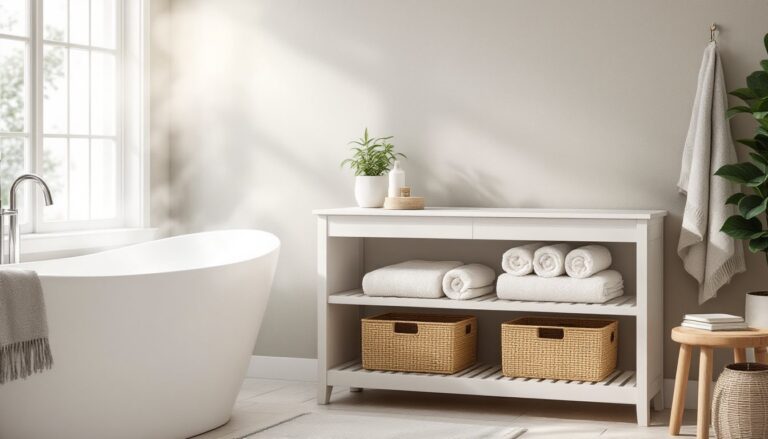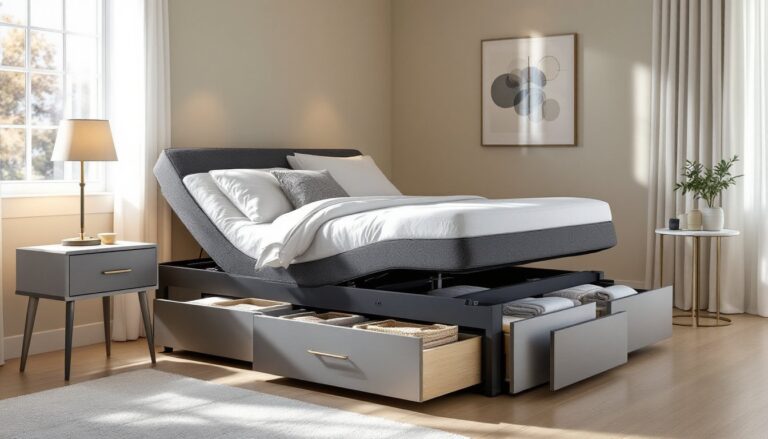

A bedroom storage ottoman does double duty in ways few pieces of furniture can match. It’s a footrest, a seat, a decorative accent, and a hidden stash for everything from extra pillows to off-season clothing. In bedrooms where square footage is precious, a storage ottoman becomes the kind of practical win that makes you wonder why you didn’t build or buy one sooner. Whether you’re cramped in a studio apartment or just tired of clutter creeping under the bed, this guide walks through what makes a storage ottoman work, how to choose one that fits your space, and how to build a custom version if you want to go that route.
Table of Contents
ToggleKey Takeaways
- A bedroom storage ottoman solves dual problems by providing functional seating and hidden storage for pillows, linens, and seasonal clothing in space-constrained bedrooms.
- Quality construction matters: look for hardwood frames, heavy-duty piano hinges, high-density foam padding, and performance fabrics that resist wear and staining.
- The ideal bedroom storage ottoman size is 18–24 inches wide and 12–16 inches tall, leaving 2–3 feet of clearance around the bed for safe movement and navigation.
- Building a custom storage ottoman is a straightforward DIY project using 2×4 lumber, plywood, foam padding, and upholstery fabric, costing roughly half the price of ready-made options.
- Styling your storage ottoman with coordinating throws and minimal accessories keeps your bedroom feeling calm while integrating the piece into your overall design scheme.
- Interior organization using fabric bins and cedar blocks prevents stored items from shifting and maintains order inside the ottoman over time.
Why Bedroom Storage Ottomans Are a Game-Changer for Small Spaces
Storage ottomans work because they solve a real problem: you need somewhere to put things, but you don’t have room for another dresser or cabinet. Unlike open shelving that gathers dust or under-bed storage that’s awkward to access, an ottoman sits right where you’d want a footrest anyway. It blends into your existing layout without announcing itself as a storage solution.
For apartment dwellers and anyone living in a tight bedroom, this furniture piece eliminates the need to choose between comfort and practicality. A quality ottoman can hold a surprising amount of weight, typically 200–300 pounds for the seat itself, depending on the frame construction. The hidden compartment inside can store 15–30 pounds of linens, sweaters, or other bedroom essentials without sagging or collapsing.
The secondary benefit is visual calm. When clutter lives inside an ottoman instead of stacked on a chair or floor, the room automatically feels larger and more peaceful. You’re not fighting eye strain from visual noise: you’re looking at a single, purposeful piece of furniture that actually earns its footprint.
Key Features to Look For in a Quality Storage Ottoman
Not all ottomans are built the same. A cheap ottoman will sag after six months and won’t open smoothly: a well-made one will last years and actually make you enjoy using it.
The hinged lid mechanism matters most. Look for lids that either lift straight off or swing open on slow-close hinges, not those cheap, pinched-hinge designs that snap shut on your fingers. Heavy-duty piano hinges (the kind used on musical instrument cases and tool boxes) are the gold standard, though they add cost. If you’re building custom, a piano hinge is worth the investment.
The frame construction determines whether the piece will hold up. Hardwood frames (oak, poplar, or maple) are better than particle board, which compresses over time. If you’re shopping secondhand or considering a budget brand, give the frame a good flex test, push down on the corners. Any creaking or movement means the joinery is weak.
The interior compartment should have some kind of divider or soft walls to prevent stored items from shifting. A flimsy interior might start out organized but turns into a jumbled mess within weeks. Wall-mounted hooks or a small divider solve this without adding much weight or cost.
Materials and Durability Considerations
Upholstery fabric takes the most wear because you’re sitting on it regularly. Cotton blends and polyester hold up better than pure linen if the ottoman lives in a high-traffic bedroom. If pets or kids are involved, consider performance fabrics like Sunbrella or solution-dyed synthetic blends, they resist staining and withstand moisture far better than natural fibers.
For the frame itself, kiln-dried hardwood resists warping better than furniture-grade plywood. The wood needs to be dry to prevent joints from loosening as humidity fluctuates. If you’re building, look for lumber that’s been stored indoors for at least a week before assembly.
The padding inside affects both comfort and longevity. High-density foam (at least 2 inches thick, 25 lb. density) compresses slowly over time, whereas budget foam starts flattening within a year. Innerspring or hybrid padding (combining foam and springs) adds cost but feels more supportive if the ottoman doubles as a seat for reading or watching TV.
Finish matters too. Stain and polyurethane (3-coat systems) withstand moisture and minor spills far better than wax or oil finishes. If you’re building and want natural wood visible, a water-based polyurethane looks cleaner than traditional amber-tinted finishes and resists yellowing.
Size and Placement Options for Maximum Functionality
An ottoman that’s too small disappears into the room and becomes useless: one that’s too large dominates the space and blocks traffic flow. The sweet spot is usually 18–24 inches wide and 12–16 inches tall, which fits comfortably at the foot of most beds without making navigation awkward.
Measure twice before you commit. The ottoman should leave at least 2–3 feet of clearance on either side of your bed for walking and dressing. If your room is tight, a rectangular ottoman (24 × 16 inches) works better than a square one because it doesn’t block as much floor space when pushed against the bed.
Height matters for both function and proportion. A lower ottoman (12 inches) works better as a footrest if you’re sitting on your bed: a taller one (16–18 inches) doubles as extra seating because it sits level with the bed edge. If you’re building and want it to work with multiple spaces later (guest room, living room), aim for around 14–15 inches, a middle ground that doesn’t feel too high or sunken.
Placement changes how much storage capacity feels practical. An ottoman at the foot of the bed stays out of your way and creates a visual anchor for the room. Angled in a corner near a window works well for reading nooks. Near a closet door, it becomes a holding station for items in transit, handy for outfit staging or seasonal rotation. One practical tip: ensure the hinged lid can open fully without hitting a wall or dresser.
DIY Storage Ottoman Project: Build Your Own Custom Design
Building a storage ottoman sounds intimidating but breaks down into five straightforward steps: frame, attach lid, upholster, add hinges, and finish. You’ll need basic tools, circular saw or miter saw, drill, staple gun, tape measure, and a few hours of focused time.
Materials you’ll need:
- 2×4 lumber (for the frame base and supports)
- 3/4-inch plywood (bottom and sides)
- 1×2 lumber (optional, for cleaner edges)
- High-density foam (2 inches, 25 lb. density)
- Upholstery fabric (cotton blend or performance fabric, 2–3 yards)
- Piano hinges (12-inch minimum, rated for 100+ pounds)
- Brackets, screws, and finishing nails
- Polyurethane stain or paint
Step-by-step:
-
Build the frame. Cut 2×4s to create a rectangular box (18 × 24 inches is a good size). Use pocket hole joinery or simple lap joints at the corners, both are stronger than butt joints alone. The frame should sit 12–14 inches off the ground when finished.
-
Attach the bottom and sides. Cut 3/4-inch plywood to match your frame dimensions. Attach the bottom panel with pocket holes or wood glue and screws (1.25-inch deck screws work well). Add side panels the same way, leaving the top open for the lid.
-
Make the lid. Cut a plywood piece slightly larger than the frame opening (it’ll sit flush and overhang slightly for a polished look). Attach foam padding to the top with spray adhesive, then wrap with upholstery fabric and staple underneath, this is the same technique used for bench seats.
-
Install hinges. Mount piano hinges on the back edge of the frame and lid. Use brass or stainless steel to resist rust, especially in humid bedrooms. Make sure the lid opens smoothly without binding.
-
Upholster the exterior. Wrap the frame sides and front with batting and fabric, stapling underneath just like the lid. This hides the plywood and gives the ottoman a finished, furniture-quality look.
-
Finish and test. Sand any rough edges, apply polyurethane to visible wood, let everything cure fully (24 hours minimum), then load it up carefully and test the lid action. If it sticks, sand down any high spots where the lid meets the frame.
Free woodworking plans for upholstered ottomans are available online, Ana White’s upholstered toybox ottoman is a solid reference, and sites like IKEA Hackers offer creative storage solutions if you want to modify existing furniture instead of building from scratch.
Safety notes: Wear safety goggles when cutting lumber or plywood. Use a dust mask when sanding or working with foam (some foam releases fine particles). Staple guns can drive staples at high speed, keep your hands clear and use eye protection. If you’re uncomfortable with any step, don’t push it: a bent hinge or wobbly frame is worse than paying a local woodworker or carpenter to handle assembly.
Styling and Decorating Tips for Bedroom Ottomans
An ottoman doesn’t have to blend invisibly into your room, it can be a design statement that pulls your bedroom scheme together.
Color and fabric choices set the tone. A neutral gray or charcoal ottoman works as a visual bridge in rooms where the bed and dresser already define the main colors. A bold pattern (geometric, damask, or subtle stripe) adds personality without overwhelming a small space. If your bedroom leans minimalist, leather or faux leather in black or cognac brown adds sophistication.
Layering and accessories make the ottoman feel intentional, not like storage furniture hiding in the corner. A chunky throw blanket draped over the edge adds warmth and texture. A single decorative pillow (coordinating with your bedding) placed on top during the day makes it feel like part of your overall design rather than just functional.
Proportion matters when styling. Keep the surface relatively clear, one pillow and a blanket, maybe a small lamp on a side table nearby, but not a clutter of knickknacks. In small bedrooms especially, an ottoman that looks styled but restrained keeps the room feeling calm.
Practical styling includes organization inside. Use fabric bins or cedar blocks to separate clothing categories and control odors. Label the bins if multiple people use the bedroom, so everyone knows what’s stored where. This prevents the ottoman from becoming a dumping ground where items get lost.
If you’re building a custom ottoman, consider how it coordinates with bedroom storage solutions you already have. A matching ottoman and headboard fabric or frame style creates visual continuity. Alternatively, a contrasting ottoman can anchor the foot of the bed and create deliberate visual interest, like an accent wall, but functional.
Conclusion
A storage ottoman transforms a bedroom from cramped to calm by solving two problems at once: you get a place to sit and put your feet, and you gain genuine storage without eating up floor space. Whether you buy one or build it yourself, the investment pays off every time you toss off your shoes and prop your feet up.
Building your own gives you complete control over size, materials, and style, and it costs roughly half what a quality ready-made ottoman runs. For anyone comfortable with basic woodworking, it’s a weekend project that teaches real skills. If you’d rather not wield a circular saw, Fix This Build That and similar sites have clear plans and step-by-step guidance. Either way, a storage ottoman is the kind of practical furniture piece that earns its place in your bedroom year after year.