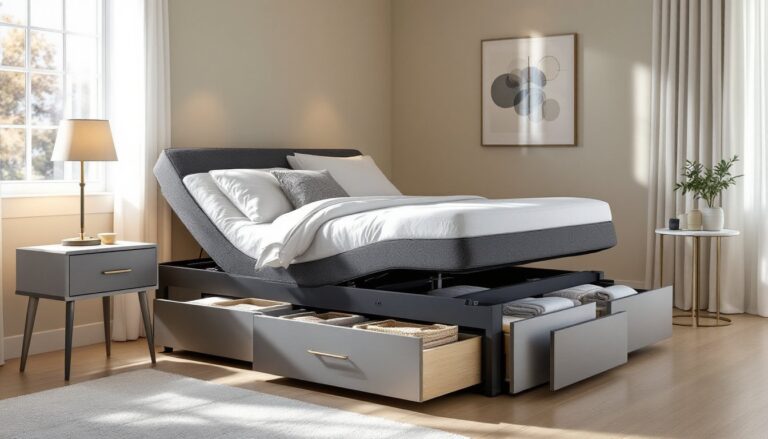
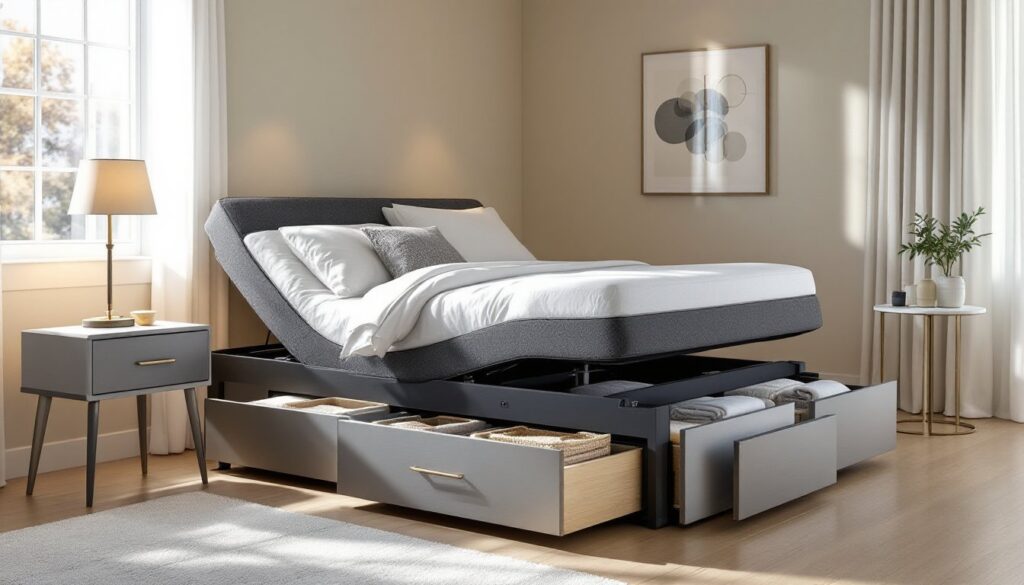
Adjustable bed frames with storage are transforming how homeowners approach bedroom design. They combine the health benefits of elevation adjustability with practical under-bed storage, eliminating the need to choose between comfort and functionality. Whether you’re maximizing a small bedroom or simply tired of clutter, these hybrid frames deliver on both fronts. This guide walks you through what makes them worth the investment, how to evaluate your options, and what to expect during setup and maintenance.
Table of Contents
ToggleKey Takeaways
- Adjustable bed frames with storage eliminate bedroom clutter by combining customizable sleeping positions with 20–50 cubic feet of usable under-bed storage, solving two problems in one investment.
- Storage options include drawers for quick access, lift-top mechanisms for long-term storage without requiring side clearance, or combination systems that maximize capacity but add complexity and cost.
- Choose between steel frames ($400–$1,200), wooden frames ($600–$2,000), or budget alternatives based on durability needs, and prioritize dual-motor systems for independent head and foot adjustment if budget allows.
- Proper setup requires two people, a level surface, and testing the adjustment mechanism before loading the mattress to prevent noise, stress points, and premature wear.
- Adjustable bed frame longevity reaches 10+ years with minimal maintenance including monthly dust removal, occasional lubrication of drawer tracks, and avoiding extreme angles that stress the motor.
What Makes Adjustable Bed Frames With Storage Stand Out
Key Benefits for Modern Homeowners
Adjustable bed frames with storage solve two persistent bedroom problems at once: lack of storage and lack of customizable sleeping positions. Unlike traditional bed frames that sit at a fixed height and angle, adjustable models let you raise the head, foot, or both to reduce snoring, ease back pain, improve circulation, or simply create a better reading or TV-watching setup.
The storage component removes the “wasted” space beneath your mattress. Depending on the frame design, you’re gaining 20 to 50 cubic feet of usable storage for linens, seasonal clothing, shoes, or other items. For smaller bedrooms or apartments, that’s equivalent to removing the need for an extra dresser or closet shelving.
These frames also tend to improve bedroom aesthetics compared to traditional under-bed storage boxes. Purpose-built drawers or lift-top access points look intentional and finished, not like you’re hiding clutter underneath. Plus, adjustable frames reduce stress on your back and neck during sleep and relaxation, which matters more as we age. The combination is why these setups have become popular in master bedrooms and guest rooms alike.
Storage Capacity and Design Considerations
Types of Storage Options Available
Adjustable bed frames offer storage in several configurations, and choosing the right one depends on your needs and space.
Drawers are the most common approach. Full-width drawers on one or both sides slide out from the frame and hold bulky items like comforters, extra pillows, or off-season bedding. These are durable and easy to access, though they require clearance on at least one side of the bed to open fully.
Lift-top mechanisms give you access to a hollow storage cavity under the mattress platform. You lift the entire sleeping surface (hydraulics assist the weight) and store items inside. This works well for items you don’t access frequently, since it takes a bit more effort than sliding a drawer. The upside: no side clearance needed, and you maximize vertical space. Many homeowners pair a lift-top frame with simple lift top storage bed plans if they’re building a custom option.
Shelving or open storage built into the frame’s legs or sides lets you display folded blankets, baskets, or decorative storage boxes. This approach looks clean if organized well but doesn’t hide clutter as effectively as drawers or lift-tops.
Combination systems blend two or three of the above, perhaps drawers on one side and a lift-top, or shelving plus drawers. These maximize storage but add complexity and cost.
Consider your daily workflow: Do you need quick access to items (drawers), or are you storing things long-term (lift-top)? Will you display items, or hide them completely? What size items do you store most? A queen-size frame might offer 40 cubic feet of drawer storage, but a lift-top might exceed that with internal cavity space.
Choosing the Right Frame for Your Space
Size, Material, and Budget Factors
Frame size must match your mattress and room. Standard sizes are twin, full, queen, and king. Most adjustable models work with standard mattress dimensions, but verify compatibility, some frames have a slight lip or rail that affects where the mattress sits. Measure your bedroom doorway and stairwells if you’re moving the frame in: a queen frame disassembled is still bulky.
Materials vary widely. Steel frames with reinforced joints are the workhorse option, durable, affordable ($400–$1,200), and handle the repeated stress of adjustment cycles. Wooden frames (oak, walnut, or plywood construction) run $600–$2,000 and offer aesthetic appeal but require more careful inspection for joint integrity under load. Particle board or MDF storage components are budget-friendly but won’t last as long or withstand moisture in humid climates.
Motor and adjustment range matter for comfort and longevity. Single-motor frames adjust the head or foot via linkage: dual-motor frames adjust head and foot independently, offering more positions but costing $200–$400 more. Look for motors with a quiet operation (under 40 decibels) and a warranty of at least 5 years. Standard range is 0–60 degrees, which handles most use cases.
Weight capacity should exceed your combined weight plus mattress and storage load. Most adjustable frames handle 350–600 lbs. If you’re at the upper end, confirm the frame’s rating and check whether the manufacturer recommends professional installation.
Budget reality: Entry-level adjustable frames with basic storage run $500–$800. Mid-range models ($1,000–$2,000) add smoother motors, better materials, and larger storage capacity. Premium frames exceed $2,500 and include features like USB ports, built-in lighting, massage functions, and high-end wood finishes. For a DIY approach, IKEA Hackers showcases budget-friendly modifications that let you add storage to existing adjustable bases, often saving 30–50% versus purpose-built frames.
Don’t skimp on the mattress. An adjustable frame needs a compatible mattress, memory foam, latex, or hybrid types that flex without cracking. Innerspring mattresses can fail under repeated adjustment.
Setup, Maintenance, and Long-Term Care
Delivery and unboxing usually requires two people and 1–2 hours. Frames ship in flat boxes: you’ll assemble the base platform, attach adjustment motors or lift mechanisms, and attach rails. Read the manual first, motor wiring and hydraulic hose placement vary by manufacturer. Don’t rush: loose bolts or misaligned joints cause noise and premature wear.
Check that the frame is level using a bubble level on the sleeping surface. Uneven frames create stress points and uneven mattress settling. Adjust the feet if the frame has leveling screws.
Test the adjustment mechanism before loading the mattress. Run the head and foot through their full range 3–4 times to ensure smooth operation and identify any grinding sounds or stutters. A slight hum from the motor is normal: grinding or clicking indicates a problem, contact support before loading weight.
Maintenance is straightforward. Vacuum or sweep under and around the frame monthly to prevent dust accumulation in motors or drawer tracks. Wipe down steel frames with a dry cloth: wood frames benefit from furniture polish twice a year if exposed wood is visible. Don’t use water on electrical components.
For drawer-based storage, periodically check that slides move smoothly. Light machine oil on metal tracks keeps them gliding: don’t overdo it. If a drawer sticks, you’re more likely to damage it forcing it open, stop and inspect the track for debris or misalignment.
Motor longevity depends on cycle frequency. If you adjust your frame daily, expect 5–10 years of reliable service: if you adjust it a few times weekly, 10+ years is realistic. Keep the motor away from moisture and don’t leave the frame at an extreme angle (near 90 degrees) for extended periods, it stresses the motor.
Warranty coverage typically spans 2–5 years for motors and structural components. Register your frame with the manufacturer: it often extends warranty by a year and ensures you’re notified of recalls.
If you’re building a custom frame or modifying one, Fix This Build That offers detailed woodworking tutorials on reinforcing joints and adding storage features safely.
Making Your Adjustable Bed Frame Decision
Adjustable bed frames with storage earn their place in modern bedrooms by solving real problems, they improve sleep quality, provide essential storage, and save space in the process. Start by assessing your storage needs and available space, then identify whether drawers, lift-tops, or combination systems fit your workflow. Balance your budget against durability and motor quality: this isn’t an impulse purchase, but a frame that works well lasts 10+ years. With proper setup and basic maintenance, you’ll enjoy a functional, comfortable bedroom that works as hard as you do.