

In the battle against germs, the bathroom is often the frontline, and it’s time to arm yourself with the ultimate weapon: bathroom sanitizer. Let’s face it, nobody wants to play hide and seek with bacteria while trying to enjoy a moment of peace. With a trusty bathroom sanitizer by your side, you can turn that germ-infested throne into a sparkling sanctuary.
Overview of Bathroom Sanitizers
Bathroom sanitizers play a crucial role in maintaining hygiene. They effectively kill germs and bacteria commonly found in bathrooms. Products in this category typically include sprays, wipes, and gels.
Sanitizing surfaces such as sinks, countertops, and toilets reduces the risk of illness. Using bathroom sanitizers regularly enhances the overall cleanliness of the space. Most sanitizers contain ingredients like alcohol or quaternary ammonium compounds to achieve this.
Specific brands often offer formulations targeting various surfaces and germs. It’s essential to choose a sanitizer approved by health regulatory agencies. Reading labels ensures users understand the active ingredients and usage instructions.
The application of bathroom sanitizer should occur frequently, especially in high-touch areas. Areas such as faucets, toilet handles, and light switches require particular attention. Routine cleaning helps create a safer environment for everyone.
Research indicates that proper sanitizer use can decrease infection rates in home and public bathrooms. Effectiveness depends on following manufacturer guidelines for contact time and surface preparation.
Bathroom sanitizers are instrumental in promoting cleanliness and reducing health risks. Prioritizing regular use of these products contributes to a healthier living environment.
Types of Bathroom Sanitizers
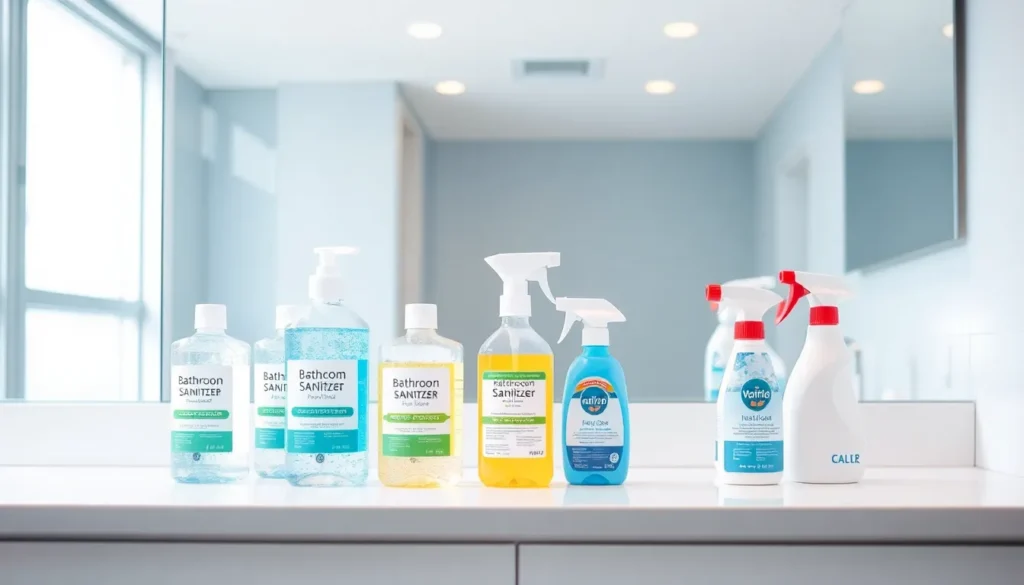
Bathroom sanitizers come in various forms, each effective in maintaining cleanliness and reducing bacterial presence. Understanding the different types helps in selecting the right product for optimal hygiene.
Liquid Sanitizers
Liquid sanitizers provide a versatile option for disinfecting bathroom surfaces. These products often contain alcohol or other potent disinfectants, targeting a wide range of pathogens. Users can apply liquid sanitizers directly to surfaces or use them in spray bottles for easy distribution. Selecting a liquid sanitizer that meets health regulatory approvals ensures effectiveness against germs. Maintaining consistent application across frequently touched areas, such as faucets and countertops, maximizes germ eradication, promoting a healthier bathroom environment.
Wipes and Sprays
Wipes and sprays offer convenience and ease of use for quick sanitization tasks. Pre-moistened wipes simplify the cleaning process, allowing individuals to wipe down surfaces without additional tools. Disinfectant sprays provide flexibility for covering larger areas and hard-to-reach spots. Both formats contain ingredients designed to kill bacteria and viruses on contact, enhancing bathroom hygiene. Choosing products with clear labeling ensures that users know what pathogens are targeted, reinforcing effective cleaning practices in shared spaces.
Key Ingredients to Look For
Selecting the right bathroom sanitizer involves understanding key ingredients. The effectiveness of these ingredients directly contributes to maintaining a germ-free environment.
Alcohol-Based Sanitizers
Alcohol-based sanitizers, especially those containing at least 60% ethanol or isopropyl alcohol, effectively kill a wide range of pathogens. These products work quickly, drying fast to provide instant sanitization. Alcohol evaporates rapidly, making it suitable for high-touch surfaces like faucets and handles. It’s important to check the concentration levels as they determine the sanitizer’s effectiveness. Focusing on products that meet health regulatory standards ensures reliable germ-killing capabilities.
Natural Alternatives
Natural alternatives offer an eco-friendly option for bathroom sanitization. Ingredients like thyme oil, tea tree oil, and vinegar possess antibacterial properties. These substances can kill germs without harsh chemicals, making them safer for households with children and pets. Products labeled as biodegradable often include these natural ingredients. Considering these options provides an effective yet gentle approach to maintaining bathroom hygiene while minimizing environmental impact.
Benefits of Using Bathroom Sanitizers
Bathroom sanitizers play a crucial role in maintaining hygiene and safety. These products effectively combat germs, transforming bathrooms into clean environments.
Hygiene and Health
Sanitizers significantly reduce the presence of harmful bacteria and viruses. Studies show that regular use can lower infection rates in households. They protect individuals from illnesses linked to unclean surfaces, creating safer spaces for everyone. High-touch areas like faucets and toilet handles require particular attention. Frequent sanitization of these spots minimizes cross-contamination risk. Selecting EPA-approved products enhances effectiveness, ensuring that health standards are met.
Odor Elimination
Bathroom sanitizers eliminate unpleasant odors linked to bacteria buildup. Effective formulas neutralize smells, leaving behind a fresh scent. Products that contain essential oils can provide a pleasant aroma while still sanitizing surfaces. Regular use prevents odors from becoming persistent, contributing to a more inviting bathroom atmosphere. Proper application targets problem areas, such as around toilets and sinks. Maintaining cleanliness not only improves hygiene but also elevates overall comfort in shared spaces. A fresh-smelling bathroom creates a more enjoyable experience for all users.
How to Use Bathroom Sanitizers Effectively
Proper use of bathroom sanitizers maximizes their effectiveness in creating a hygienic space. Techniques involve focused application on high-touch surfaces for optimal germ elimination.
Application Techniques
Spray a fine mist of liquid sanitizers directly onto surfaces. Allow at least 10 seconds for the sanitizer to work before wiping. Use wipes for small areas and ensure coverage on all sides. When targeting toilet handles and faucets, apply thoroughly to kill bacteria. Switch to gels for vertical surfaces like walls, applying a generous amount and leaving it undisturbed for proper contact time. Always check product instructions for specific application recommendations.
Frequency of Use
Sanitizing high-touch areas every day reduces the risk of infection. During cold and flu season, increase this frequency to several times a day. Bathrooms used by multiple people require more frequent applications to lower cross-contamination. After each use, a quick wipe-down can significantly enhance hygiene. Assess traffic in the bathroom to determine sanitization needs and adjust frequency accordingly. Regular maintenance helps sustain a clean environment, making the bathroom more inviting for users.
Maintaining a clean bathroom is essential for promoting health and well-being. Bathroom sanitizers play a vital role in achieving this goal by effectively killing germs and bacteria. With various options available such as sprays, wipes, and gels, users can easily incorporate sanitization into their daily routines.
Choosing the right product is crucial. Opting for sanitizers with approved ingredients ensures maximum effectiveness while considering eco-friendly alternatives can provide added peace of mind. Regular application in high-touch areas significantly reduces the risk of cross-contamination and illness.
By prioritizing bathroom hygiene, individuals not only foster a safer environment but also enhance the overall comfort of their shared spaces. Embracing these practices transforms the bathroom into a welcoming oasis, free from harmful pathogens and unpleasant odors.