Bathroom storage is one of those projects that separates a serene morning routine from a frustrating scramble for your toothbrush. Whether you’re working with a cramped half-bath or a sprawling master, finding the right shelf storage solution makes all the difference. Floating shelves, corner units, and over-the-toilet systems come in countless configurations, but not every option works for every space or budget. This guide walks you through eight smart bathroom shelf storage ideas that actually fit real bathrooms, with practical advice on materials, installation considerations, and organization strategies to keep everything accessible and tidy.
Table of Contents
ToggleKey Takeaways
- Bathroom shelf storage solutions like floating shelves, corner units, and over-the-toilet systems eliminate clutter, improve safety, and prevent moisture damage to products by lifting items off wet surfaces.
- Choose shelf materials based on moisture resistance: glass and metal excel in humidity, while wood requires thorough sealing on all sides and re-sealing every 2–3 years in high-moisture bathrooms.
- Proper installation on wall studs using lag bolts or threaded rods is critical—relying only on drywall anchors will eventually fail under bathroom moisture and vibration.
- Organize bathroom shelf storage by category with daily items at eye level, use clear containers for visibility, and keep shelves only 60–70% full to maintain functionality and prevent clutter buildup.
- Install a bathroom exhaust fan and run it during and 20 minutes after showers to reduce humidity, which significantly extends the life of shelves and prevents mold growth.
- Over-the-toilet shelving units provide roughly 1,200 cubic inches of storage per three-shelf unit, making them one of the quickest and most practical storage solutions for small bathrooms.
Why Bathroom Shelf Storage Matters
A well-organized bathroom isn’t just pleasant to look at, it’s functional and safer. Cluttered countertops create tripping hazards, and bottles left loose invite mold and water damage. Proper shelf storage lifts items off wet surfaces, reduces humidity exposure for products that degrade in moisture, and makes your daily routine faster.
Most bathrooms lack built-in storage by design. A standard vanity cabinet holds essentials, but medications, supplements, cleaning supplies, towels, and personal care items quickly overflow. Wall-mounted shelves solve this without eating floor space or requiring a renovation. Installing bathroom shelf storage also prevents the common mistake of storing damp items in closed cabinets, where moisture breeds mildew. When you give each product a home and keep things elevated and visible, you actually use what you buy instead of rediscovering duplicates behind closed doors.
Floating Shelves: Minimalist Storage With Maximum Impact
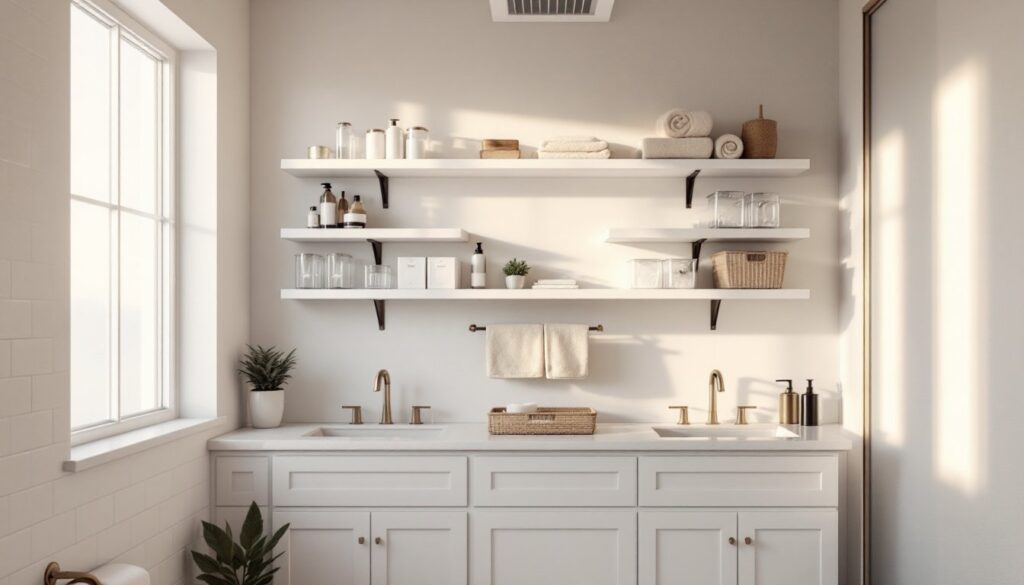
Floating shelves are the go-to choice for modern bathrooms because they look clean, adapt to any wall, and don’t require a stud every 16 inches like traditional brackets. They appear to hover because the mounting hardware is hidden inside the shelf itself, supported by a long bolt or rod anchored directly into wall studs.
For bathroom use, choose shelves at least 0.75 to 1 inch thick to handle weight without excessive deflection. Narrower shelves (8–12 inches deep) suit small bathrooms and keep items within arm’s reach: deeper shelves (14–18 inches) work in spacious bathrooms. Load capacity varies, quality floating shelves hold 25–50 pounds depending on material and hardware. Most bathrooms don’t exceed this, but stacking heavy jars or stocking towels adds up fast.
Installation requires finding studs with a stud finder and drilling into them with lag bolts or threaded rods rated for the shelf’s weight. Missing the stud and relying on drywall anchors alone will eventually fail under bathroom moisture and vibration. If studs don’t line up with where you want shelves, you’ll need to remove drywall and add blocking between studs, easier than it sounds but requires a handsaw or oscillating multi-tool.
White, walnut, and black floating shelves dominate bathroom design because they coordinate with tile and fixtures. Particle board and plywood are budget-friendly but less moisture-resistant over years: solid wood or composite materials hold up better. Sealed wood resists water damage when treated properly on all sides before installation.
Corner Shelves and Wall-Mounted Options
Corner shelves pack surprising storage into wasted space. A corner between the vanity and the wall becomes a home for cotton rounds, small bottles, and rolled towels without eating into the room’s open feel.
Corner floating shelves use the same stud-mounting principle as standard floating shelves but are cut or shaped to fit two perpendicular walls. Some pivot or rotate slightly, while others sit flush in the corner. Installation works best when studs align on both walls: if they don’t, anchor blocking into studs at least 16 inches away and use long bolts through both walls.
Wall-mounted ladder shelves (three to five horizontal rungs on a frame) are a trendy option that works especially well in tight bathrooms. They take up minimal wall space and let you stack rolled towels, baskets, or small items on each rung. Lean-to ladder shelves don’t require wall mounting at all, they simply lean at an angle, but they’re less stable and not ideal in high-traffic bathrooms where someone might brush past and knock them over. Stainless steel or powder-coated metal ladder shelves resist moisture best.
Angled shelves above the toilet (but not blocking sightlines) use dead space efficiently. A two-shelf angled unit tucks nicely between the toilet and wall, creating a home for reading material, air freshener, and extra toilet paper. Installation requires a level and sturdy wall anchors rated for moisture environments.
Over-the-Toilet Shelving Units
Over-the-toilet shelves are the quickest install in the bathroom shelf storage arsenal because many free-standing units require zero tools. If you rent, work in a small bathroom, or dislike drilling, a sturdy over-toilet shelf is often the answer.
Free-standing units simply rest on the toilet tank rim: they’re lightweight, adjustable in height, and move when you need access to the tank. They’re perfect for temporary storage or trial layouts, but tall or top-heavy units can wobble, especially if the toilet rocks slightly. Most work better in powder rooms than daily-use master baths.
Wall-mounted over-toilet shelves bolt to the wall studs (or use heavy-duty toggles on masonry) and span the toilet width, so they’re rock-solid and won’t shift. Typical configurations are two or three shelves, each 12–18 inches wide and 8–12 inches deep. A 48-inch wide, three-shelf over-toilet unit provides roughly 1,200 cubic inches of storage, enough for a week’s worth of supplies. Weight capacity per shelf usually ranges from 20–35 pounds.
Be honest about what you’re storing. Medications need a dry, cool spot away from kids or pets: an over-toilet shelf exposed to shower steam may not be ideal for every medication. Rolled towels, paper goods, and decorative baskets handle humidity fine. If installing bolts through tile, use a diamond-core or tungsten carbide drill bit on the lowest speed to avoid cracking. Locate studs first: if studs don’t align with your ideal shelf position, move the unit or use toggle bolts rated for the weight.
Glass vs. Wood vs. Metal: Choosing the Right Material
Material choice drives durability, maintenance, and aesthetics. Each handles humidity differently and pairs with different decor styles.
Glass shelves look sleek and show off decorative items, but they’re slippery when wet and shatter if hit. Tempered glass resists breakage better than standard glass and is worth the extra cost (typically $30–60 per shelf vs. $15–30 for standard). Glass reflects light, making small bathrooms feel larger. Drawback: dust shows easily, and water spots are constant. If using glass with wood or metal brackets, ensure the bracket edges are smooth or padded to prevent shelf damage.
Wood shelves feel warm and accept stain or paint, making them versatile. Solid hardwoods (oak, pine, walnut) are durable but heavy and expensive ($50–150 per shelf). Plywood and engineered wood are budget-friendly ($15–40) but less water-resistant and prone to swelling if sealed only on top. All wood shelves need a water-resistant finish, ideally polyurethane or polycrylic sealant applied to all six sides before installation. Re-seal every 2–3 years in humid bathrooms. Wood darkens over time as moisture accumulates: this is cosmetic but worth knowing.
Metal shelves (steel, stainless steel, aluminum) are lightweight, strong, and nearly indestructible. Stainless steel costs more ($40–100 per shelf) but resists rust indefinitely. Powder-coated steel is affordable ($20–50) but the coating can chip over years, exposing bare metal that will rust. Aluminum is rust-proof and light but bends under heavy loads. Metal reads industrial or modern, not traditional.
Durability and Moisture Resistance
Bathroom humidity is relentless. Morning showers create condensation: ventilation fans reduce it but don’t eliminate it. Materials must breathe and dry quickly or absorb minimal moisture.
Glass and metal win on moisture resistance, they don’t absorb water. Wood loses in damp bathrooms unless sealed thoroughly. If you love wood, accept that you’ll maintain the finish and possibly replace shelves every 5–10 years in a high-humidity bathroom. Plywood and MDF (medium-density fiberboard) absorb moisture fastest and swell, warp, or delaminate even though sealant.
Install a bathroom exhaust fan if one doesn’t exist, and run it during and 20 minutes after showers. An investment in ventilation (a simple $100–200 fan from a hardware store) pays back in shelf life and overall bathroom health. Research shows that proper bathroom ventilation reduces mold and mildew growth significantly, extending the life of all finishes and materials.
Organization Tips for Maximum Functionality
Storage space is wasted if items aren’t easy to find and return. The goal is visibility and access, not cramming everything onto shelves.
Group by category: medications on one shelf (in a locked drawer insert if kids are in the home), toiletries on another, and towels on a third. Within categories, keep daily items at eye level, toothbrushes, deodorant, face wash, and reserve high or low shelves for occasional use. Reserve bathroom shelf storage for items that genuinely belong in the bathroom: seasonal medications, old razors, and dried-up bottles are clutter.
Use clear containers for small items like hair clips, cotton pads, and samples. Clear acrylic or polypropylene bins cost $3–15 each and let you spot what you need without unloading the shelf. Label each bin with a label maker or painter’s tape. Rolling carts with three tiers fit neatly in corners and pull out for easy access when organizing or cleaning, a hack borrowed from real-world organization strategies that bathroom designers swear by.
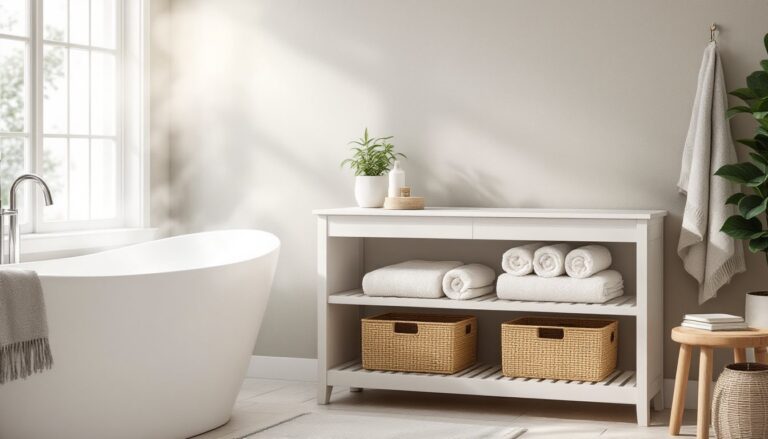
Towel storage works best in a woven basket or linen bin on a shelf. Rolled towels take less space than folded ones and look more resort-like. Keep guest towels on an accessible middle shelf. Reserve open hooks on the wall (mounted 60–66 inches from the floor for adults) for daily hand towels: this keeps shelves clutter-free.
Decorate minimally. A single plant or small framed photo breaks monotony without crowding shelves. The bathroom is utilitarian: resist the urge to fill every inch. When shelves are 60–70% full, they’re easier to clean, items don’t shift, and the space feels intentional rather than packed. This principle applies whether you’re organizing a powder room or a master bath, and it mirrors the minimalist approach recommended by design sites like Remodelista for high-moisture spaces.
Re-evaluate twice a year. Medications expire, products run out, and habits change. A quick quarterly purge keeps your bathroom shelf storage functional and prevents the slow creep of clutter that makes every morning feel chaotic.