A bedroom’s primary real estate shouldn’t go to waste, especially when square footage commands a premium. Bed frames with storage solve one of the most stubborn problems homeowners face: where to stash seasonal clothes, linens, bedding, and the inevitable clutter that creeps in. Instead of surrendering floor space to a dresser or nightstand or stuffing a closet until it surrenders, you can integrate storage directly beneath or within the bed frame itself. This approach works in tight urban apartments, suburban master bedrooms, and guest rooms that need to pull double duty. Whether you’re building from scratch or upgrading an existing setup, understanding the types of bed frames with storage available and how to choose the right one can transform a cramped bedroom into an organized, functional sanctuary.
Table of Contents
ToggleKey Takeaways
- Bed frames with storage eliminate the need for separate dressers and nightstands, freeing up valuable floor space especially in bedrooms under 120 square feet.
- Storage bed frames come in two main types: drawer-style designs with built-in slides rated for 75+ pounds each, and open shelving options that double as décor while requiring more dust maintenance.
- Drawer beds provide dust protection and accessibility for stored seasonal clothing and linens, while open shelving is easier to load but requires regular cleaning to prevent dust accumulation.
- When choosing a storage bed frame, prioritize solid hardwood or reinforced steel over particle board, verify proper mattress support with appropriate slat spacing, and ensure ball-bearing drawer slides for long-term durability.
- Monthly maintenance including lubricating drawer slides, vacuuming quarterly, and monitoring humidity levels between 40–60% prevents wobbling, squeaking, and warping while extending the lifespan of storage beds.
- Hybrid designs combining a few shelves with enclosed drawers offer the best balance of accessibility and dust protection for most bedroom layouts.
Why Bed Frames With Storage Are a Game-Changer for Small Spaces
The math is simple: a standard queen bed occupies roughly 80 square feet when you account for the footprint and walkway clearance. Adding a dresser, nightstands, and storage bins quickly eats up the remaining room. A storage bed frame eliminates this redundancy by doubling down on what’s already taking up space.
Storage bed frames free up square footage that would otherwise go to standalone furniture. This is especially critical in bedrooms under 120 square feet, common in apartments, townhouses, and secondary bedrooms. Instead of crowding a room with multiple pieces, homeowners install one multi-functional piece that handles sleeping and stashing in a single footprint.
Beyond the obvious space savings, integrated storage keeps dust off stored items. Under-bed drawers protect seasonal clothing and linens from settling dust that accumulates in open corners. Proper ventilation matters here: moisture trapped under a bed without airflow can encourage mold or musty odors, so choosing frames with slatted supports or ventilation gaps helps. The accessibility factor counts too, no more crawling under a low platform to retrieve something shoved into the far corner. Quality storage bed frames put everything within arm’s reach, making rotation and maintenance of stored items straightforward.
Types of Storage Bed Frames to Match Your Needs
Drawers and Under-Bed Storage Solutions
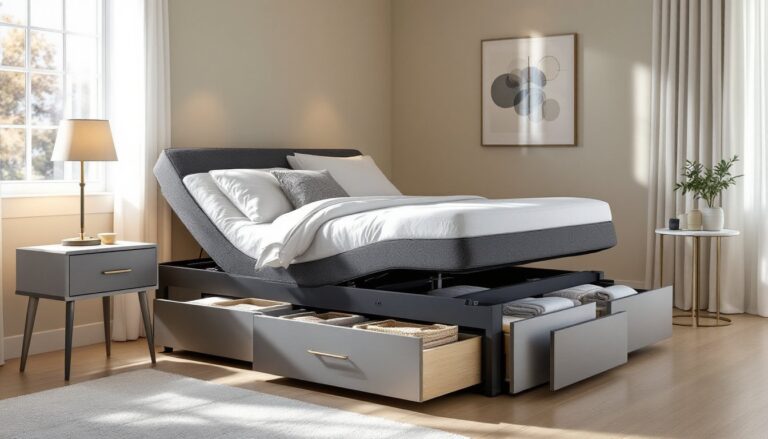
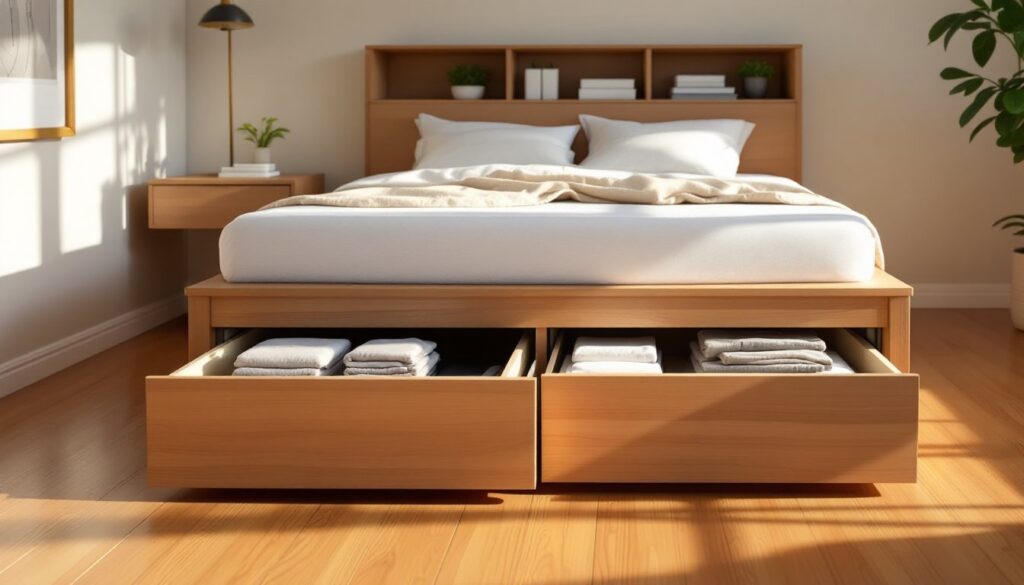
Drawer-style storage beds come in two main configurations: wooden frames with built-in drawers that slide out from the base, and platform designs with recessed compartments that you access from the foot or sides. Wooden drawer beds are the workhorse option, typically crafted from solid wood like oak, pine, or engineered wood composites. Expect drawers on one or both long sides, with individual drawers holding 20–40 pounds each depending on size and build quality.
When evaluating drawers, check the slide mechanism. Ball-bearing slides (often rated for 75+ pounds per drawer) glide smoothly and last longer than plastic or cheap metal tracks that sag after a few years. A twin storage bed with four drawers holds roughly the volume of a small dresser: a queen with six drawers matches a full dresser plus nightstand storage. Recessed platform designs store under the entire mattress surface, offering flexibility, you can use plastic bins, wooden boxes, or custom-sized containers. This approach works well if you don’t mind lifting the mattress occasionally or prefer rolling storage bins to fixed drawers.
Shelving and Open Storage Designs
Open shelving beds trade enclosed drawers for visible cubbies, shelves, or niches built into the headboard and frame structure. These designs suit bedrooms with boho or modern aesthetics where visible storage becomes part of the décor. Shelves hold books, decorative boxes, plants, and lightweight items that don’t need to be hidden.
Open storage is easier to load and unload than drawers, you don’t muscle anything in and out. But, dust settles faster on exposed shelves, so items need regular wiping. Weight distribution matters too: overloading upper shelves can destabilize a frame, especially on lighter metal or composite models. A hybrid approach, combining a few shelves with one or two enclosed drawers, balances accessibility and dust protection. Some frames add a storage ottoman or bench at the foot, doubling as seating and a lidded storage box.
How to Choose the Right Storage Bed Frame for Your Bedroom
Start with measurements. Your mattress size (twin, full, queen, king) dictates frame dimensions: don’t guess. Measure your bedroom floor space, accounting for door swing, closet access, and walkway clearance on all sides. A king bed needs a minimum 10×12 room to feel balanced: anything smaller and the bed dominates visually.
Next, assess your storage priorities. Are you storing seasonal winter coats, extra sheets, and shoes? You need enclosed drawers with weather protection. Displaying plants, books, and decorative boxes? Open shelving works. Storing heavy items like blankets and comforters? Ensure the frame is rated for the weight, look for solid hardwood frames or reinforced steel, not thin plywood. Budget matters too. Solid wood storage beds run $600–$1,500 for a queen depending on wood type and drawer count: metal frames are cheaper ($300–$800) but less durable: particle board or MDF composites fall in the middle ($400–$1,000).
Consider assembly and delivery. Many storage bed frames arrive disassembled and require 2–4 hours to put together with a socket wrench, screwdriver, and a helper, working alone on a heavy frame is frustrating and risky. Check reviews for stability reports: wobbly frames or squeaky drawers become maddening over months of use. Storage solutions for small bedrooms can inform your choice, especially if you’re working with tight floor plans. Also verify that slats or platform supports fit your mattress type: some innerspring mattresses need slats every 3 inches, while memory foam tolerates wider spacing.
Installation and Maintenance Tips for Long-Lasting Performance
Assembly is worth doing right. Lay out all parts and hardware in a clear workspace before you start. Tighten all bolts and connections firmly, don’t over-tighten wood-to-metal joints, which can strip threads, but ensure everything is snug. Use a level to check that the frame sits flat: an uneven bed stresses joints unevenly and shortens lifespan.
After assembly, test drawer slides and weight distribution. Open and close each drawer a dozen times to seat the slides: they’ll feel smoother after break-in. Don’t max out weight limits immediately: drawers rated for 40 pounds shouldn’t hold 60. Distribute weight evenly across drawers, heavy items in lower drawers, lighter items up top.
Maintenance keeps storage beds functioning smoothly for years. Vacuum under the mattress and in drawers quarterly to prevent dust buildup and moisture issues. Wipe down drawer slides monthly with a dry cloth: occasional silicone-based lubricant spray (not WD-40, which attracts dust) helps stubborn slides. For wooden frames, dust with a microfiber cloth and check for loose bolts or cracks every 6 months. Keep humidity stable, bedrooms under 40% or over 60% relative humidity can warp wood or encourage rust on metal hardware. Consider placing absorbent pads or small dehumidifiers in enclosed storage areas if you live in a humid climate. If drawers start sticking or squeaking, inspect the slide tracks for debris, clean them, and lubricate lightly. Minor tweaks now prevent bigger repairs later.
Conclusion
Bed frames with storage collapse the boundary between sleeping and organizing, making them indispensable for modern bedrooms where space is precious. Whether you choose drawer-based designs for maximum protection or open shelving for flexibility, the key is matching the style to your actual storage needs and room dimensions. Proper selection, assembly, and maintenance ensure these frames earn their place as hardworking bedroom staples for years to come. Sites like Instructables offer step-by-step tutorials if you’re building custom options, while Fix This Build That provides in-depth woodworking guidance for DIYers ready to craft their own storage solutions. And for broader organizational strategies, storage bins complement bed frame storage nicely, creating a layered system that tackles clutter from multiple angles.