
Bedroom space is precious, and most people don’t have enough of it. Between clothing, seasonal items, extra bedding, and everything else that needs a home, storage becomes critical. A bed platform with integrated storage solves this problem elegantly, it transforms an underused area beneath your mattress into valuable real estate. Whether you’re working with a compact apartment or a sprawling master bedroom, bed platform storage adapts to your needs while keeping the room feeling open and functional. This guide walks you through what bed platform storage is, why it works, and how to choose or build the right solution for your space.
Table of Contents
ToggleKey Takeaways
- Bed platform storage integrates compartments, drawers, or shelving directly into your bed frame, transforming the underused space beneath your mattress into valuable storage for clothing, bedding, and seasonal items.
- A bed platform with storage maximizes square footage in compact bedrooms while eliminating visual clutter—open floor space makes rooms feel larger than scattered boxes or bins.
- Drawers remain the most popular storage choice due to their practicality, but open shelving and cubbies offer modern, minimalist alternatives if you prefer visible organization.
- DIY bed platform storage projects range from beginner-level designs with simple sliding boxes to advanced lift-top builds, with most intermediate projects taking 20-30 hours and requiring basic to intermediate woodworking skills.
- Proper organization of bed platform storage keeps items within arm’s reach and extends mattress life by providing consistent support across the entire sleeping surface, avoiding premature sagging.
What Is Bed Platform Storage?
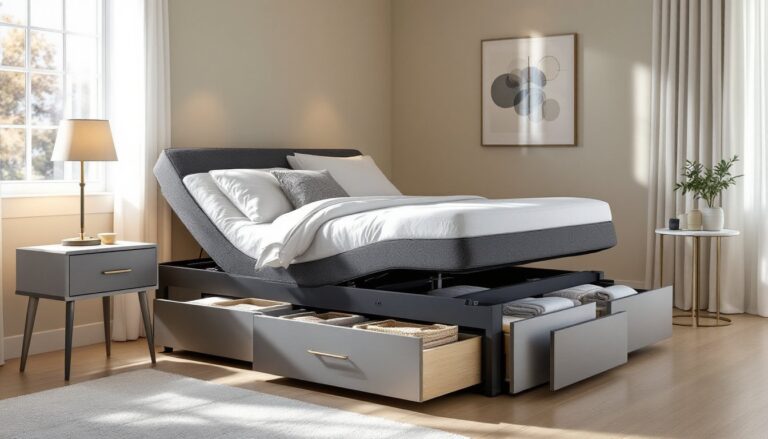
A bed platform with storage is a raised bed frame designed with built-in compartments, drawers, cubbies, or shelving underneath the sleeping surface. Unlike traditional bed frames that sit on legs or a simple box spring, platform storage beds use the void between the floor and your mattress as functional storage. Most designs elevate the mattress 12 to 24 inches off the ground, creating plenty of headroom for storage access.
These platforms come in two main categories: solid platform beds (with a flat, slatted base supporting the mattress) and platform storage beds (with drawers, shelves, or compartments integrated into the frame structure). Common materials include solid wood (oak, pine, walnut), engineered wood (plywood, MDF), and metal frames with wooden platforms. The sleeping surface stays the same, you still use your regular mattress, but everything below it becomes usable storage space.
Built-in storage platforms are distinct from traditional bed frames with under-bed storage bins. With a true platform bed, the storage is part of the frame itself, often with cleaner lines and better weight distribution. A platform bed with 4 built-in drawers, for example, distributes weight evenly across the frame instead of concentrating load on a few leg points.
Why Choose a Bed Platform With Storage?
Bed platform storage solves several bedroom challenges at once. First, it maximizes square footage in rooms where floor space is limited. Instead of adding a dresser or storage cabinet (which eats 20 square feet or more), the storage integrates vertically into furniture you already need. Second, it eliminates visual clutter. Open floor space makes rooms feel larger and more organized than scattered storage boxes or bins.
From a practical standpoint, platform storage keeps frequently needed items within arm’s reach, extra blankets, pillows, seasonal clothing, and bedding supplies stay accessible without taking up closet space. Many people also appreciate the aesthetic. Modern platform beds look intentional and designed, not like a stopgap solution. Building or selecting a well-constructed platform bed adds genuine furniture value to your bedroom.
Cost-effectiveness matters too. A quality platform bed with storage often costs less than purchasing a bed frame and separate dresser or storage unit separately. For renters or people in transition, a modular platform design lets you move storage components independently if needed. A platform bed also extends mattress life by providing consistent support across the entire sleeping surface, reducing sag compared to older box spring setups.
Popular Storage Solutions for Bed Platforms
Drawers and Sliding Storage
Drawers remain the most popular storage choice for bed platforms because they’re practical and aesthetically clean. A typical platform bed includes 2 to 4 full-width drawers running the length of the frame. Each drawer usually holds 30 to 50 pounds of weight when properly designed with ball-bearing slides (which distribute weight smoothly as you open and close). Drawer depth ranges from 12 to 18 inches, giving you real storage capacity without taking up excessive floor space.
For drawers to work well, the frame must be sturdy. A bed platform designed for drawers typically uses ¾-inch hardwood plywood or solid wood boards at least 1 inch thick to prevent sagging. The slides themselves need proper installation, misaligned slides cause drawers to jam or tilt. If building your own, quality slides cost $15 to $30 per pair: it’s worth the investment. Many DIYers underestimate drawer weight when stacked with winter blankets or shoes, leading to premature slide failure.
Sliding storage offers an alternative: shallow platforms or boxes that slide out from beneath the bed like shallow drawers. These work well for items you access less frequently, seasonal décor, off-season clothing, or extra pillows. Sliding storage typically runs shallower than full drawers (6 to 10 inches deep) but spans the entire width of the bed frame, creating continuous, flexible compartments.
Open Shelving and Cubbies
Open shelving underneath a bed platform creates a more modern, minimalist look. Instead of closed drawers, the frame includes horizontal shelves or vertical dividers creating cubbies. This approach works especially well in contemporary or Scandinavian-style bedrooms where you want visual lightness. Open shelving is also easier to build yourself, you’re essentially creating a simple bookcase structure under your mattress platform.
Cubbies (individual square or rectangular compartments) offer a middle ground between open shelves and drawers. Each cubby is defined by vertical and horizontal dividers, giving organization structure while keeping items visible. Many people use fabric bins or baskets within cubbies, which look intentional and prevent small items from rolling around. Cubbies work particularly well if you have kids’ bedrooms, guest rooms, or dorm spaces where flexible, modular storage is valuable.
The downside: open shelving shows dust and requires regular tidying since items are visible. If you’re storing seasonal items or things you’d rather not see daily, closed drawers are the better choice. If you’re storing decorative baskets, rolled blankets, or neatly folded clothes you don’t mind seeing, shelving creates an airy feel without closing off the space underneath.
DIY Bed Platform Storage Projects for Every Skill Level
Building your own bed platform storage is entirely achievable with basic woodworking skills. Start with your bed size: a standard queen platform measures 60 inches wide by 80 inches long, and a full is 54 by 75 inches. Actual dimensions matter because undersized frames reduce storage space, and oversized frames waste materials.
Beginner projects focus on simple, sturdy designs. A basic platform with 2 or 4 shallow under-bed storage boxes uses a simple frame of 2×10 or 2×12 lumber for perimeter support, cross beams every 16 inches for joists, and plywood decking on top. The storage boxes slide underneath like drawers but without built-in slides, they rest on hard wood or plastic feet. This approach requires a power drill, circular saw, and basic measurement skills. Most beginners complete this in a weekend. Plans and inspiration can be found on woodworking project websites and furniture building communities.
Intermediate projects add full-width drawer storage. You’ll need a quality miter saw (or circular saw with a guide) for precise cuts, a drill-driver, pocket-hole jig, and good quality ball-bearing drawer slides. The frame uses ¾-inch plywood or 1x lumber for the perimeter, with dados (groove joints) or pocket holes to attach the drawer boxes. Plan for 20 to 30 hours of labor. This is where assembly precision matters, poorly aligned drawer boxes cause slides to bind. Take time measuring the frame’s interior dimensions and test-fit drawer boxes before final assembly.
Advanced projects incorporate lift-top storage (a hinged platform bed that opens to reveal under-mattress storage) or multiple drawer sizes. These require precision joinery, pneumatic tools, and a solid understanding of weight distribution and hardware limitations. Consider professional plans rather than designing from scratch. Advanced builds often justify purchasing tools you’ll use repeatedly, like a table saw and pneumatic nail gun, which speed up production and improve quality.
Safety is non-negotiable at any skill level. Wear safety glasses when cutting or drilling, dust masks when ripping lumber or sanding, and ear protection when using power tools. A platform bed supports your full body weight every night, corners or reinforcements cannot be shortcuts. Under-bed storage receives stress from opening and closing drawers repeatedly, so joinery must be solid. If you’re unsure about weight distribution or structural integrity, ask a carpenter friend to review your design before building.
Maximizing Space and Organization
Once your bed platform storage is built or installed, maximize what you store. Use the space for items that make sense near your bed: extra blankets, seasonal pillows, off-season clothing, and items you grab in the morning or before sleep. Keep drawers organized with dividers or small containers so items don’t shift when you open and close them. Soft items like sweaters and blankets compress well: shoes and rigid items should sit flat on drawer bottoms.
Label drawer fronts or use a system you’ll actually follow. A simple label or small whiteboard reminder takes 30 seconds and prevents the “what’s in that drawer?” moment six months later. For open shelving or cubbies, IKEA storage solutions and other budget-friendly containers keep everything visible and tidy. Pretty baskets or fabric bins transform cubbies from cluttered-looking to intentional.
Weight distribution matters too. Heavier items (shoes, books, winter gear) belong in lower drawers closer to the floor. This keeps your bed frame balanced and reduces strain on drawer slides. Don’t overstuff individual drawers, they’ll get stuck or slides will wear prematurely. A drawer designed for 50 pounds works best when carrying 30 to 40 pounds.
Finally, remember that under-bed storage attracts dust if not sealed. If you live in a dusty climate or have severe allergies, consider adding dust ruffles or storage boxes with lids, or simply vacuum under your bed seasonally. Well-designed platform storage makes this easier than crawling on the floor to reach boxes in tight spaces.
Getting Started With Your Bed Platform Storage Project
Bed platform storage transforms wasted space into functional organization while keeping your bedroom looking intentional and uncluttered. Whether you choose a ready-made option or build your own, starting with clear measurements, honest assessment of your skill level, and realistic timelines prevents frustration. Begin with the simplest design that solves your problem, you can always upgrade later. Your future self will thank you every time you reach into organized drawers instead of digging through piles of bedding or clothes on the floor.