Bedrooms are shrinking, but stuff isn’t. A standard master bedroom in new construction averages 14×16 feet, barely enough room to turn around when you’re juggling seasonal clothes, sports gear, and those boxes you promised yourself you’d unpack. That’s where bed storage frames come in. Instead of fighting for closet space or cramming plastic bins under the bed, a storage frame turns your bed itself into a hardworking piece of furniture. Whether you’re optimizing a tiny studio or reclaiming floor space in a modest-sized bedroom, a quality bed storage frame combines function with form, no more hidden clutter or awkward tower of plastic containers in the corner.
Table of Contents
ToggleKey Takeaways
- Bed storage frames transform underutilized floor space into organized storage, eliminating the need for additional dressers and bins while keeping items at accessible waist level.
- Choose drawer-style storage frames for frequently accessed items like clothing and linens, or lift-up hydraulic designs for bulky, seasonal items accessed only a few times per year.
- Measure your bedroom and doorways before purchasing—standard queen frames are 60×80 inches—and verify the frame can be delivered through your door, as some models ship in separate pieces for easier assembly.
- Quality hardware like undermount ball-bearing slides ensures drawers operate smoothly for years, while poor-quality mechanisms bind and fail quickly, making this a critical factor in long-term durability.
- Maximize storage efficiency by using drawer dividers, rotating seasonal items every three months, investing in shallow storage containers to double capacity, and maintaining hardware with twice-yearly cleaning and tightening.
- Budget realistically: basic wooden bed storage frames cost $400–$800, mid-range models $800–$1,500, and high-end frames with hydraulic systems exceed $2,000, with IKEA and similar retailers offering assembled options under $600.
Why Bed Storage Frames Are a Game-Changer for Small Spaces
A standard bed frame occupies roughly 55 square feet of floor space, that’s prime real estate in any bedroom. Standard storage frames leverage that footprint by adding drawers or lift-up compartments underneath, eliminating the need for additional dressers, nightstands, or under-bed storage bins. The math is straightforward: more usable storage without expanding your bedroom’s footprint.
Small-space living has become the norm for renters and first-time homebuyers. According to the U.S. Census, the median new home size remained below 2,300 square feet through 2024, with many urban apartments and condos running 600–800 square feet total. In that context, vertical and under-utilized storage makes a measurable difference in daily comfort and organization.
Beyond pure square footage, bed storage frames improve accessibility. Unlike bins shoved under a bed or items stacked in a closet corner, a drawer-style frame brings items to waist level, easier on your back and faster to grab. You’re not crouching, not stretching to a high shelf, and not rooting through a jumble of boxes.
Types of Bed Storage Frames to Match Your Needs
Not all storage frames are created equal. The best choice depends on what you’re storing, how often you need access, and your budget.
Drawers and Pull-Out Storage
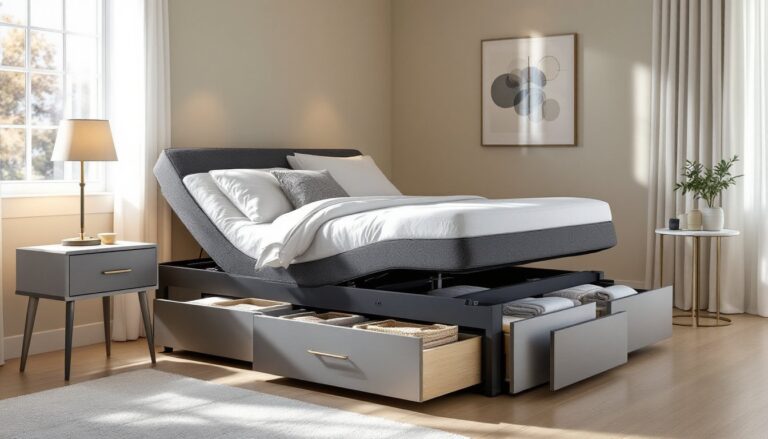
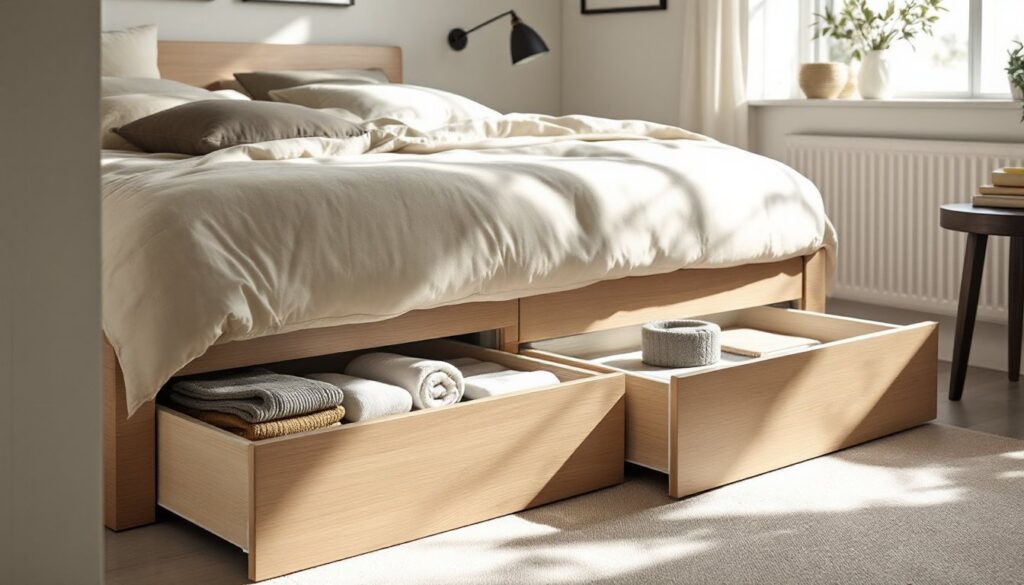
Drawer-style storage frames feature one to four spacious compartments built into the frame’s base. Each drawer typically measures 4–6 inches deep, shallow enough for bedding, sweaters, and seasonal clothing, but deep enough to hold meaningful volume. Some premium models offer deeper drawers (8–12 inches) suited for bins, shoes, or larger items.
Pull-out variants slide smoothly on heavy-duty ball-bearing glides (the hardware that allows drawers to open and close). Quality hardware is crucial: cheap glides bind and wear out after a few seasons. Look for frames with undermount slides, which attach to the drawer’s underside rather than the sides, they’re quieter, stronger, and last longer.
Drawer frames suit clothing, linens, and items you’ll access weekly or monthly. They’re less ideal if you’re storing heavy, infrequently-used items like winter coats or holiday decorations. Builders and furniture makers like those featured on Ana White offer detailed plans for DIY versions, letting you customize drawer depth and quantity.
Lift-Up and Hydraulic Options
Lift-up frames (also called platform beds with storage) feature a hinged top that raises on pneumatic or hydraulic struts, the same mechanical arms found in car trunks. The entire mattress and frame base tilt up, revealing one large storage cavity underneath.
These work best for bulky, infrequently accessed items: suitcases, seasonal decor, extra pillows, or overflow from a move. The trade-off is convenience, you can’t grab a shirt without lifting the mattress. Still, for truly small spaces, this design maximizes every inch.
Hydraulic struts require occasional maintenance (they can weaken over time), and replacement parts aren’t always cheap. Also, the mattress weight matters: a queen mattress plus bedding weighs 50–70 pounds, and the struts must handle that load repeatedly. Poor-quality hardware fails faster.
Choosing the Right Bed Storage Frame for Your Bedroom
Start with a hard look at what you’re actually storing. Make a list: daily-access items (pajamas, work clothes), seasonal swaps (winter coat, shorts), and long-term storage (keepsakes, sports equipment). Items you touch weekly belong in drawer frames: items you access twice a year fit lift-up designs.
Next, measure your bedroom and doorways. A storage frame is only useful if it fits in the room and can be delivered or assembled in place. Standard queen frames measure 60 inches wide by 80 inches long: king frames run 76 inches wide by 80 inches long. If your bedroom door is only 30 inches wide and the frame comes as one unit, you’ve got a problem. Some models ship in pieces (headboard, frame rails, drawers separate), which eases assembly in tight spaces.
Material and construction quality vary wildly. Solid wood (real hardwood, not veneer) costs more upfront but lasts decades with care. Engineered wood or plywood is cheaper and lighter, but edges and joints fail sooner, especially in humid climates. If you’re building a DIY frame, research plans carefully: resources like Fix This Build That provide tested designs and material recommendations.
Budget realistically. A basic wooden storage frame runs $400–$800. Mid-range models with quality hardware and solid construction land at $800–$1,500. High-end frames with premium finishes or hydraulic lift systems exceed $2,000. IKEA and similar retailers offer assembled-on-site options under $600, though they use lighter engineered materials. For budget-conscious DIYers, IKEA Hackers showcase creative modifications to cheaper frames, adding custom storage compartments or upgrading hardware.
How to Maximize Storage Efficiency in Your Bed Frame
Once you have a storage frame installed, a few smart practices keep it functional and organized.
Use drawer dividers. A single 24-inch-wide drawer holding a jumble of sweaters becomes a mess within weeks. Dividers (cardboard, plastic, or fabric) segment each drawer into zones, T-shirts here, socks there, undergarments in the back. This takes minutes to set up and saves countless hours of rummaging.
Rotate seasonal items systematically. Don’t just cram winter coats into a drawer in June and forget them. Rotate every three months: what’s coming into season moves to accessible drawers: what’s leaving goes to the back or lift-up compartments. This rhythm keeps high-traffic items visible and prevents surprises (like finding a forgotten jumper in July).
Invest in storage containers. Shallow plastic bins or fabric organizers maximize vertical space within drawers. A 4-inch-deep drawer holds one layer of clothing flat: add a shallow bin and you can stack two layers, doubling capacity. Choose bins slightly smaller than the drawer opening so they slide freely without binding.
Keep a written inventory. It sounds fussy, but a simple list (drawer one: winter sweaters, sizes M–L: drawer two: summer shorts) prevents you from buying duplicates and ensures family members know where things live. Digital photos of each drawer’s contents work too and take five minutes to capture.
Clean and inspect hardware twice yearly. Dust gathers on ball-bearing slides. A quick vacuum removes debris that slows drawers and strains mechanisms. Tighten any loose bolts or fasteners, wood naturally shifts with humidity changes, and looseness compounds over time.
Dimensions matter here too. Knowing your drawer’s actual interior width and depth (not the frame specs) helps you buy appropriately-sized bins. Measure twice: buy once.
Conclusion
Bed storage frames are a straightforward way to reclaim bedroom space and stay organized. Whether you choose drawer-style convenience or lift-up capacity depends on how you live, frequent access or occasional bulk storage. Measure carefully, match your frame to your actual storage needs, and maintain it with simple upkeep. A well-chosen storage frame pays dividends in daily comfort and peace of mind for years to come.