Under the bed is prime real estate that most people overlook. It’s dark, accessible, and sits empty while your closets overflow. Whether you’re dealing with seasonal clothes, extra bedding, or just need more breathing room, under bed storage containers solve the space puzzle efficiently. The key is finding the right container type for your bedroom layout, moisture levels, and what you’re storing. This guide walks you through the best options available in 2026 and shows you how to make the most of that underutilized zone.
Table of Contents
ToggleKey Takeaways
- Under bed storage containers maximize wasted bedroom space without consuming closet real estate, making them essential for bedroom organization and clutter control.
- Wheels, clear visibility, and proper moisture control are critical features—choose plastic rolling bins for frequent access, fabric boxes for breathable seasonal storage, and wooden drawers for premium long-term organization.
- Bed height, item type, and moisture levels determine your best under bed storage choice; measure before purchasing and test containers to ensure they fit your bed frame and roll smoothly.
- Proper labeling, weight distribution, and moisture barriers prevent mildew and extend container lifespan, while seasonal culling keeps under bed storage functional rather than turning it into a forgotten storage closet.
- Budget-friendly plastic bins ($15–30) work well for most needs, mid-range fabric boxes ($25–60) offer breathability, and wooden drawers ($100–300+) provide premium aesthetics for infrequent access situations.
Why Under Bed Storage Is Essential for Bedroom Organization
Bedrooms are where clutter multiplies fastest. Clothes pile up, seasonal items get shoved into corners, and suddenly you can’t find anything. Under bed storage reclaims that wasted space without eating into your room’s footprint or eating up expensive closet real estate.
Wheels make a critical difference here. Containers that roll out smoothly save your back and make accessing items far easier than reaching awkwardly to the far corner. No more contorted stretching or having to empty the entire drawer to grab one sweater.
Moisture and dust are real concerns in enclosed spaces beneath beds. Poor air circulation means humidity lingers, especially in basements or bathrooms-adjacent bedrooms. Smart container choices, breathable fabrics, proper sealing, or moisture barriers, prevent mildew, mustiness, and the need to rewash stored items. Consider that Storage Solutions for Small Bedrooms details strategies specifically for tight bedroom configurations where every inch matters.
Top Types of Under Bed Storage Containers
Flat Plastic Containers With Wheels
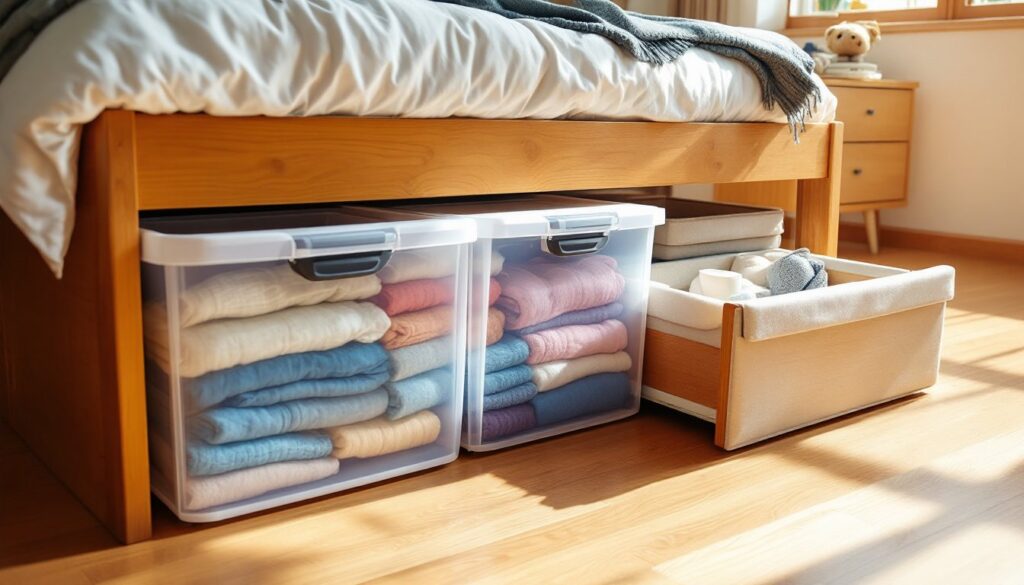
Clear plastic bins with wheels are the workhorses of under bed storage. You can see contents at a glance without opening them, and rolling wheels keep your back safe. Look for containers in the 16–20 gallon range: they fit snugly under most bed frames while holding substantial volume.
Quality matters. Budget containers crack after a few roll cycles, and cheap wheels jam or derail. Spend the extra few dollars for rugged polypropylene construction and heavy-duty ball-bearing wheels. Locking casters prevent containers from rolling during bed movement.
One downside: ventilation is limited in sealed plastic bins. If storing anything that could get damp, like off-season linens, add silica gel packs or activated charcoal to absorb moisture. Replace packs every 3–4 months, especially in humid climates.
Fabric Storage Boxes and Bins
Fabric boxes offer breathability that plastic can’t match. Natural airflow means stored items stay fresher, and they’re gentler on delicate fabrics. Canvas, linen, and woven polypropylene all work well, though they look different and age differently.
Drawbacks exist. Fabric doesn’t seal against dust as effectively as plastic, you won’t see contents without opening the box, and dark fabrics hide stains until you pull them out. Some fabric boxes are flimsy: reinforced sides and sturdy wooden or plastic frames prevent collapse when stacked. Many Storage Bins combine fabric with structural supports to solve both issues.
For long-term storage of out-of-season items, fabric boxes work beautifully. They compress slightly, helping you fit more underneath a standard bed frame. Pair them with cedar blocks to repel moths naturally.
Wood and Metal Under Bed Drawers
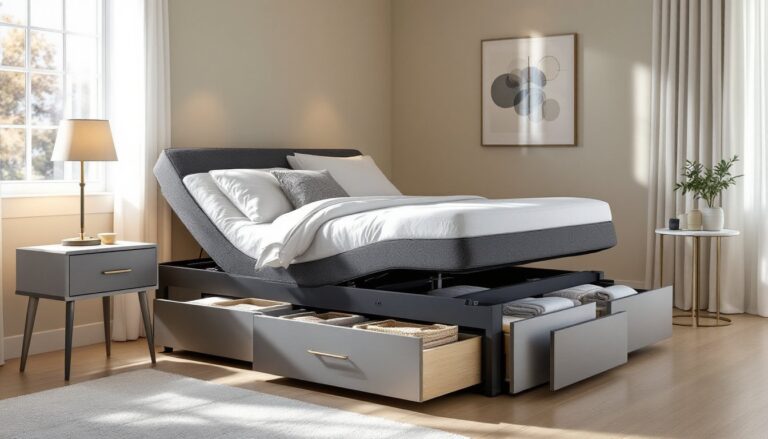
Wooden under bed drawers feel built-in and professional. Solid wood versions (pine, plywood) are durable and age well, while veneered options cost less and still look clean. Metal frames with wood tops offer industrial appeal.
Drawers require more space to operate than rolling bins, you need clearance to pull them out fully. Measure your bed height and floor space carefully before committing. A standard bed frame leaves 8–12 inches of vertical clearance: standard drawers need about 6–8 inches, leaving room for contents.
Quality hinges and slides matter enormously. Ball-bearing drawer slides glide smoothly for years: cheap slides jam and bind after months of use. Budget wooden drawers ($60–100 per unit) often cut corners here. Better-made versions ($150+) have reinforced bottoms that won’t sag even when loaded with dense items like books or winter boots.
How to Choose the Right Under Bed Storage for Your Needs
Start with three questions: What’s your bed height? What are you storing? How often do you access items?
Bed height determines what fits. Standard bed frames sit 10–14 inches above the floor. Modern platform beds often sit lower (6–8 inches), while ornate frames with feet might sit higher. Measure before shopping: a container that’s too tall won’t fit no matter how useful it seems.
What you’re storing shapes your choice. Seasonal clothes need breathable containers (fabric boxes work great). Off-season shoes and boots tolerate plastic bins better. Delicate keepsakes or items you rarely access prefer sealed plastic to ward off dust. Linens and blankets thrive in fabric boxes paired with cedar, plastic can trap moisture and create that stale smell.
Frequent access argues for wheels and clarity. If you’re digging into that drawer twice a week for gym clothes, plastic rolling bins beat wooden drawers every time. If you’re pulling out the same holiday decorations once a year, wooden drawers look cleaner long-term and don’t require floor space for rolling.
Moisture is the silent killer. Basements and coastal homes with humidity need ventilation or moisture control built in. Concrete floors under beds wick moisture upward, especially in spring. Moisture barriers, thin plastic sheeting between floor and container, prevent mildew. Some expert resources like IKEA Hackers show clever moisture management modifications for ready-made furniture. For persistent dampness, dehumidifiers or simple solutions like Space-Saving Storage Solutions that incorporate ventilation prevent long-term damage.
Budget constraints are real. Clear plastic rolling bins start around $15–30 per unit and last 5–7 years with normal use. Fabric boxes range $25–60 depending on material and structure. Wooden drawers are the premium option at $100–300+ per drawer. Calculate total cost based on how many containers you actually need, overshooting defeats the purpose and wastes money.
Tips for Organizing and Maximizing Under Bed Space
Label everything clearly. It sounds obvious, but unlabeled containers create chaos. Use a label maker or weatherproof tape to mark contents and seasons. Label the side facing outward so you read it without moving the container. Include a date if storing food items (yes, some people keep backup pantry items under beds).
Create zones by item type. Dedicate one container to out-of-season clothes, another to bedding, a third to shoes or storage items. This prevents mixing winter coats with summer dresses and lets everyone in the household know what goes where. Long Term Storage Solutions emphasizes this zoning principle as essential for system longevity.
Account for weight distribution. Heavy items (books, weights, large shoes) compress lighter fabrics beneath them. Place heavier containers on the outer edges where you’ll roll them out, not buried under lighter boxes stacked on top. Plastic containers handle stacking better than fabric, fabric flattens under weight.
Measure and test before committing. Slide a test container under your bed frame before buying multiple units. Ensure it rolls smoothly, doesn’t bind on frame legs or supports, and leaves room to pull it out fully. Some bed frames have center support beams that block access to the middle zone, measure around these obstacles.
Add a moisture barrier for problem areas. In damp climates, lay thin plastic sheeting or underlayment between the floor and containers. This 15-minute step prevents mildew and extends container life by years. Silica gel packs inside containers add a second defense layer for long-term storage.
Inventory what you store and cull seasonally. Pull containers out every 6–12 months and remove items you didn’t use. This prevents under bed storage from becoming a dumping ground for things you’ll never wear or use again. An organized expert approach means revisiting your system, not just setting it and forgetting it. Some people find that Storage Containers paired with seasonal audits keep bedrooms functioning as bedrooms rather than storage closets.
Consider bed skirts or dust ruffles carefully. Fabric bed skirts look polished but block air circulation and make container access awkward. Open-frame or slatted designs let air flow and let you see what’s underneath. If aesthetics matter, measure the gap between bed and floor before choosing a style, some skirts hang below container height and look odd bulging out.
Expert resources like Good Housekeeping’s under-the-bed storage tips provide additional perspective on maximizing this space strategically.