
In a world where germs seem to multiply faster than rabbits, keeping a clean home isn’t just a chore—it’s a necessity. But fear not! With a few clever home sanitization tips, anyone can turn their space into a fortress against pesky pathogens. Who knew that wielding a bottle of cleaner could feel like wielding a sword in the battle against bacteria?
Importance Of Home Sanitization
Maintaining a sanitized home prevents the spread of harmful germs and bacteria. A clean environment reduces the risk of illnesses, especially during cold and flu seasons. Diseases transmit easily in shared spaces, making regular sanitization crucial. Regular cleaning helps eliminate allergens, which creates a healthier living space for everyone.
Sanitizing high-touch surfaces is essential for daily protection. Items like doorknobs, light switches, and remote controls often harbor pathogens. Keeping these areas clean minimizes exposure to germs. Families benefit from consistent sanitization practices, leading to fewer sick days and healthier lifestyles.
Data from the Centers for Disease Control and Prevention indicates that proper sanitization can lower infection rates significantly. Using appropriate cleaning products enhances the effectiveness of sanitization efforts. Disinfectants capable of killing 99.9% of germs help maintain a safe environment.
Investing time in home sanitization saves money in the long run. Healthier home habits translate to less spending on healthcare and more time spent with loved ones. By prioritizing sanitization, individuals create a sanctuary free from harmful pathogens.
Creating a sanitization routine is a simple yet effective strategy for ongoing home maintenance. Regularly scheduled cleaning sessions build consistency and effectiveness. Staying aware of the importance of sanitization ensures a cleaner, healthier home for everyone.
Essential Cleaning Supplies
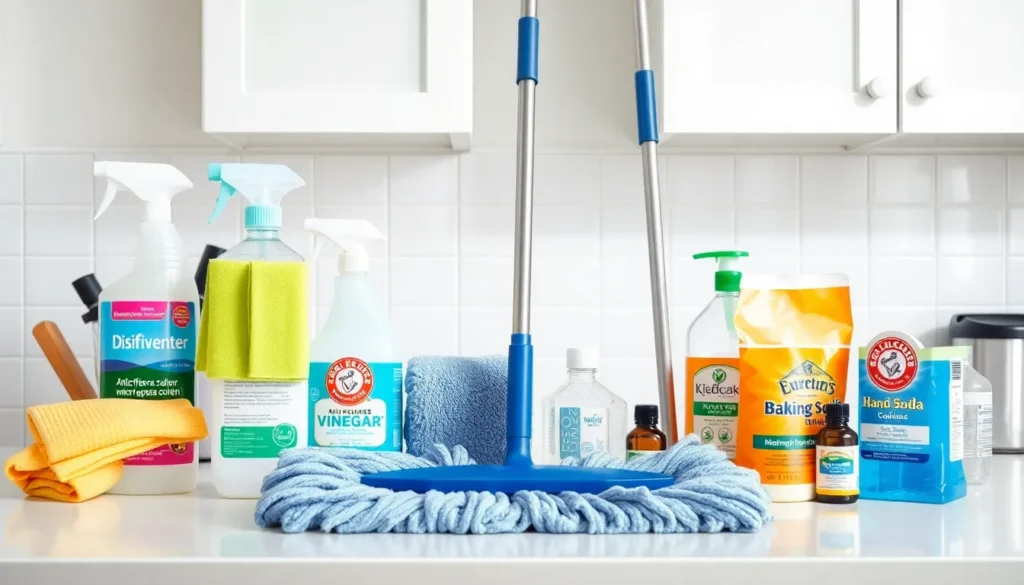
Keeping a well-stocked cleaning arsenal enhances effectiveness in home sanitization. Several essential products play a vital role in maintaining a clean and healthy environment.
Must-Have Sanitizing Products
Disinfectant wipes provide convenience for quick cleanups, especially on frequently touched surfaces. All-purpose cleaners tackle various surfaces and can cut through grease and grime effectively. Microfiber cloths capture dust and allergens more efficiently than traditional options. A sturdy mop helps maintain floor hygiene, working well with the right cleaning solution. Lastly, hand sanitizer is crucial for reducing germs on hands anytime soap and water aren’t accessible.
Eco-Friendly Alternatives
Vinegar serves as a natural disinfectant and deodorizer, excellent for cleaning and sanitizing without harsh chemicals. Baking soda acts as an abrasive cleaner while neutralizing odors; it works well on surfaces such as countertops. Lemon juice naturally disinfects and leaves a refreshing scent in spaces. Castile soap, made from vegetable oils, provides a biodegradable alternative for various cleaning tasks, promoting sustainability. Essential oils, like tea tree and lavender, add antibacterial properties while creating pleasant aromas throughout the home.
Room-By-Room Sanitization Tips
Maintaining a sanitized home requires attention to each room. Different areas of the home demand specific sanitization strategies.
Kitchen Sanitization
Focus on countertops and cutting boards, as these surfaces often harbor bacteria. Utilize disinfectant wipes to clean these areas after meal preparation. Sink and faucet handles also require regular sanitization, given their high-touch nature. Clean kitchen appliances, such as microwave door handles, using an all-purpose cleaner. The CDC recommends frequent cleaning of shared kitchen items to reduce cross-contamination and foodborne illnesses.
Bathroom Sanitization
Employ a systematic approach for effective bathroom sanitization. Start with high-touch surfaces, including faucet handles, toilet flush levers, and light switches. Use an effective disinfectant spray to eliminate germs in these areas. Toilets deserve special attention; apply a toilet bowl cleaner and scrub daily for optimal hygiene. Regularly wash bath mats and towels in hot water to further enhance cleanliness and minimize the spread of bacteria.
Living Room Sanitization
Prioritize sanitization of frequently touched items, such as remote controls, doorknobs, and light switches. Disinfect these surfaces at least once a week to keep germs at bay. Vacuum upholstery and wash cushion covers regularly to eliminate dust and allergens. For shared items like game controllers, use alcohol wipes for thorough sanitization. Incorporating regular cleaning into the living room routine contributes to a healthier environment.
Bedroom Sanitization
Develop a cleaning routine for the bedroom that includes regular washing of bed linens and pillowcases. Change sheets weekly to eliminate dust mites and bacteria. Focus on high-touch areas like doorknobs, light switches, and alarm clocks with disinfectant. Consider using an air purifier to reduce airborne allergens, enhancing the overall bedroom environment. Storing items in closed containers also reduces dust accumulation, promoting a cleaner, more sanitary space.
Daily, Weekly, And Monthly Cleaning Routines
Establishing a cleaning routine fosters a healthier home environment. Daily tasks include sanitizing high-touch surfaces like doorknobs and light switches. Maintaining this habit significantly reduces exposure to germs and allergens.
Weekly cleaning routines focus on deeper sanitization. Floors require mopping and vacuuming to capture dust and dirt. Laundry tasks include washing bed linens and towels, which play a crucial role in reducing microbes.
Monthly cleaning allows for thorough attention to neglected areas. Dusting light fixtures and ceiling fans prevents the buildup of allergens. Additionally, cleaning appliances like microwaves and refrigerators ensures a hygienic kitchen.
Integrating these routines promotes consistent home maintenance. Focus on rooms individually, catering to their specific cleaning needs. Regular attention to kitchens, bathrooms, living rooms, and bedrooms bolsters germ prevention strategies.
In kitchens, prioritize countertops and shared utensils to combat foodborne illnesses. Bathrooms require special care, ensuring that toilets and sinks are sanitized regularly. Living rooms benefit from vacuuming upholstery to eliminate dust mites. For bedrooms, air purifiers and regular bedding washes enhance overall air quality.
Together, these routines contribute significantly to a sanitized living space. Following expert recommendations from the Centers for Disease Control and Prevention enhances effectiveness. Emphasizing high-touch areas consistently throughout the week proves crucial in lowering infection rates.
Maintaining a sanitized home is essential for health and well-being. By implementing regular cleaning routines and focusing on high-touch surfaces, families can significantly reduce the spread of germs and allergens. This proactive approach not only fosters a healthier living environment but also minimizes the risk of illness.
Investing in effective cleaning supplies and eco-friendly alternatives ensures that homes remain clean without compromising safety. With simple strategies tailored for each room, anyone can create a systematic cleaning plan that fits their lifestyle. Prioritizing home sanitization ultimately leads to a happier and healthier life, allowing families to spend more quality time together.