Lost keys rank high on the list of everyday frustrations that eat up time and drain patience. Whether they’re buried in a coat pocket, dropped behind a couch, or sitting somewhere you’ve already looked three times, the hunt can make anyone late. The good news? A practical key storage solution transforms this chaos into calm. From simple wall hooks to hidden compartments, today’s options span every budget, style, and space constraint. This guide walks through the most effective approaches homeowners and DIY enthusiasts use to keep keys exactly where they’re needed, visible, secure, and within arm’s reach the moment you need them.
Table of Contents
ToggleKey Takeaways
- Wall-mounted key racks and hooks are the simplest, most accessible key storage solution, mounting securely into studs with proper hardware and positioning at eye level near your main entry point for habit-building convenience.
- Entryway wall organizers combine key hooks with mail slots and shelving to create a functional command center that prevents clutter while keeping keys visible and within reach in high-traffic zones.
- Decorative key boxes and cabinets offer style-conscious homeowners a blend of function and aesthetics, allowing you to hide keys while maintaining an organized, visually cohesive entryway or living space.
- Drawer organizers and desktop trays provide private, out-of-sight key storage ideal for home offices, though they require strong habits to prevent the “out of mind” problem of forgotten keys.
- Hidden magnetic key holders and secure key safes with PIN locks protect high-value spare keys or rental property master keys from theft and unauthorized access, balancing security with accessibility for trusted household members.
- The best key storage solution costs $10–$50, installs in under an hour, and matches your household’s specific habits, aesthetic preferences, and security needs rather than taking a one-size-fits-all approach.
Wall-Mounted Key Racks and Hooks
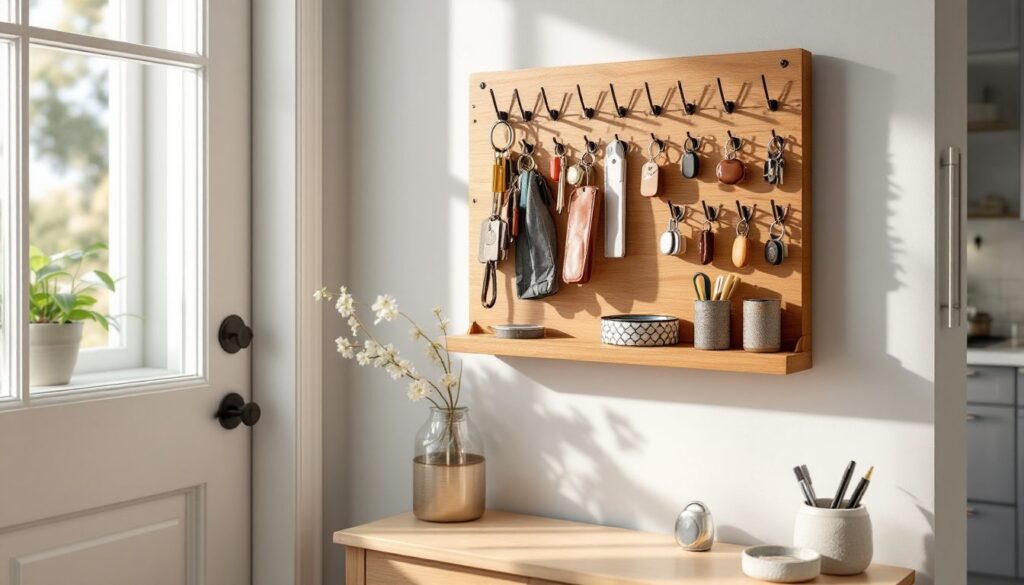
Wall-mounted racks remain the simplest and most accessible entry point for key organization. A basic metal or wooden key rack installs in minutes with two screws into a stud or with toggle bolts if mounting between studs. Standard racks hold 4 to 12 keys and typically measure 8 to 14 inches wide and 2 to 4 inches tall.
Hook style matters more than aesthetics. Look for hooks with a slight upward angle or a lip to prevent keys from sliding off. Ceramic, metal, or rubber-coated hooks all work: metal is most durable, while rubber coating reduces jingling and protects key finish. Avoid flimsy hooks that bend under the weight of a full keyring.
Installation is straightforward. Locate a stud with a stud finder, mark the mounting holes 16 inches apart (standard stud spacing), drill pilot holes, and drive #8 or #10 wood screws into the stud. If studs don’t align with your preferred location, use heavy-duty toggle bolts rated for at least 25 pounds. Drywall alone won’t hold multiple keyrings: anchors alone will eventually fail.
Place the rack at eye level near your main entry point or in the kitchen, wherever you naturally set keys down first. This habit-building placement is as important as the hardware itself. Homeowners often find wall-mounted racks work best in high-traffic zones where everyone in the household passes through multiple times daily.
Entryway Key Organizers and Wall Panels
Entryway wall organizers step up from basic racks by combining key hooks with mail slots, pen holders, and small shelving into one unit. These modular wall panels typically measure 24 to 36 inches wide and 20 to 30 inches tall, giving you a command center that handles keys plus daily clutter.
Most quality organizers use solid wood, metal, or resin-composite materials. Wood is traditional and warm but requires occasional finish maintenance: metal is modern and low-maintenance: composites resist moisture and are ideal for humid entryways near external doors. Installation uses the same stud-mounting principle as simple racks, though heavier units require ¼-inch lag bolts or multiple toggle bolts spaced no more than 16 inches apart.
Customization is a major advantage. Many systems feature removable or repositionable hooks, so you adjust key placement as needs change. Some include small drawers for change, cards, or USB drives, practical additions that keep your entryway functional without feeling cluttered.
When selecting size, measure your wall space and allow at least 6 inches of clearance on each side of the organizer. A 30-inch panel fits comfortably on most walls without overwhelming the space. Consider traffic flow: avoid placing the organizer where it blocks sight lines or becomes a stubbing obstacle.
Decorative Key Boxes and Cabinets
If visible hooks don’t match your décor or you want keys slightly hidden, decorative key boxes and wall cabinets offer a blend of function and style. These range from simple wooden boxes measuring 6 by 8 inches (holding 4–8 keys) to larger cabinets with glass doors that hold 20+ keys plus accessories.
Choosing the Right Material and Style
Wood is the most popular choice for home décor. Solid wood (pine, oak, walnut) ages well and accepts stain or paint, while veneer-faced plywood offers stability at lower cost. Metal boxes work in industrial or modern spaces: stainless steel resists moisture, while powder-coated steel comes in various colors. Resin or composite materials provide durability in humid bathrooms or entryways.
Inside, look for felt-lined hooks or magnetic strips to keep keys secure and prevent clanging. A small mirror on the inside of the door is a functional bonus. Some boxes include a small lock, useful if you manage rental properties or guest keys.
Installation is similar to racks: find a stud, drill pilot holes, and use wood screws. For decorative appeal, choose a box that complements adjacent furnishings. A craftsman-style wooden box suits traditional homes, while minimalist metal designs work in contemporary spaces. The box itself becomes a décor element, so color, finish, and hardware matter.
These work especially well in living rooms or bedrooms where a cluttered hook rack might feel out of place. 15 DIY Key Holder Ideas For Every Style And Budget offers creative design inspiration if you’re considering a custom build.
Drawer and Desktop Key Storage Options
Not everyone wants keys visible, even within a closed box. Drawer organizers and desktop trays keep keys tucked away yet accessible, ideal for home offices, desks, or kitchen drawers where visual clutter matters.
Small divided drawer inserts (typically 8 by 10 inches) use slots or compartments to separate keys by household member or purpose, house, car, garage, office. Wooden, plastic, or bamboo inserts slide easily and cost $8–$20. They’re perfect for junk drawers that need structure.
Desktop key trays are shallow dishes or small boxes that sit on a desk or nightstand. They work well in home offices where keys stay within reach but don’t occupy counter space. Material options include ceramic, wood, or brushed metal. A tray measuring 4 by 6 inches holds one keyring comfortably: larger trays (6 by 8 inches) accommodate multiple users.
The advantage is privacy and minimal visual impact. A guest walking through your home won’t see your key collection. The downside is “out of sight, out of mind”, keys hidden in a drawer are easier to forget than those on a visible rack. Mitigate this by choosing a drawer or desk location you use daily, establishing a strong habit of returning keys there immediately.
Material matters for longevity. Solid wood drawer dividers withstand years of daily use: flimsy plastic versions crack or warp. Spend the extra few dollars on a sturdy insert, especially if you manage many keys.
Hidden and Secure Key Storage Methods
For high-value keys, spare car keys, or rental property master keys, standard storage falls short. Hidden compartments and secure key safes provide protection against loss, theft, or unauthorized access.
Magnetic key holders hide keys in unexpected places, under a desk, inside a filing cabinet, or behind a picture frame. A flat neodymium magnet case (typically 2 by 3 inches) costs $5–$10 and holds one or two keys without the magnet failing under normal use. Place these in areas household members know but visitors won’t look. They’re not theft-proof but do prevent casual loss.
Key safes are small lockboxes or wall-mounted cabinets that require a PIN or key to open. A 4-digit combination lock costs $15–$30 and mounts to a wall or inside a closet. These suits homeowners who need spare key access for contractors or emergency responders without displaying every household key.
RFID-blocking containers are increasingly relevant if your key has a proximity chip (modern car fobs). A small Faraday pouch or box ($10–$25) blocks wireless signals, preventing thieves from intercepting your car’s remote unlock signal. Not essential for older mechanical keys, but smart insurance for newer vehicles.
For truly valuable keys, car keys, safe deposit box keys, consider a small wall safe bolted behind drywall or a picture frame. A 4-inch cube safe costs $40–$80 installed. This is overkill for household keys but justified if you manage multiple properties or high-value assets.
When choosing secure storage, balance accessibility with security. A safe hidden so well you forget where it is defeats the purpose. Tell trusted household members the location and access method. 11 Best Key Holders and Organizers for Easy Access reviews various secure options suited to different threat levels and budgets.
Conclusion
The best key storage solution matches your household’s habits, aesthetic preferences, and security needs. A busy family with multiple car keys might prefer a visible wall-mounted organizer in the entryway: a single homeowner in a small space might choose a decorative box or drawer insert. Start with your primary pain point, Where do keys get lost most often? What location do you pass through first when arriving home?, and build your system from there. Most solutions cost between $10 and $50, install in under an hour, and deliver years of reliable service. The result is the simple relief of knowing exactly where your keys are, every time.