Bedroom clutter creeps up fast. Clothes pile on chairs, books stack on nightstands, and seasonal gear takes over the floor. A well-designed storage cabinet with doors and shelves keeps everything hidden, organized, and within arm’s reach, without the visual chaos. Whether you’re maximizing a small bedroom, adding function to an awkward corner, or simply tired of looking at mess, bedroom storage cabinets are practical, often affordable, and increasingly stylish. This guide walks you through choosing, installing, and optimizing storage cabinets that work for your space and lifestyle.
Table of Contents
ToggleKey Takeaways
- Bedroom storage cabinets with doors and shelves hide clutter behind closed doors, making spaces feel more spacious and peaceful while protecting clothes and electronics from dust.
- Freestanding cabinets offer flexibility for renters and quick upgrades, while built-in cabinets are ideal for homeowners and add structural value when anchored to studs.
- Choose cabinet depth (12–20 inches) and width (24–48 inches) based on your items and doorway access, and verify the cabinet fits through hallways before purchasing.
- Adjustable shelves, proper leveling with shims, and securing freestanding cabinets to wall studs with L-brackets prevents tipping and ensures doors operate smoothly.
- Maximize storage efficiency by grouping similar items, using shelf dividers and drawer organizers, labeling contents, and rotating seasonal gear to keep everyday access uncluttered.
Why Bedroom Storage Cabinets Matter for Your Home
Bedroom storage cabinets solve a real problem: keeping a room functional and calm. Unlike open shelving or under-bed bins, cabinets hide clutter behind closed doors, instantly making a room feel more spacious and peaceful. They also protect clothing, linens, and electronics from dust, especially important in older homes or areas with high humidity.
Beyond aesthetics, cabinets maximize vertical wall space, crucial in smaller bedrooms where floor area is precious. A tall cabinet tucked into a corner uses dead space that might otherwise stay empty. They’re also flexible: cabinets work in guest rooms (storing linens and pillows), master bedrooms (for clothes and accessories), and kids’ rooms (toys, sports gear, out-of-season items). Most important, they cost less and install faster than custom built-ins, making them accessible for DIY projects and renters alike.
Types of Storage Cabinets: Finding the Right Fit for Your Space
Freestanding vs. Built-In Cabinets
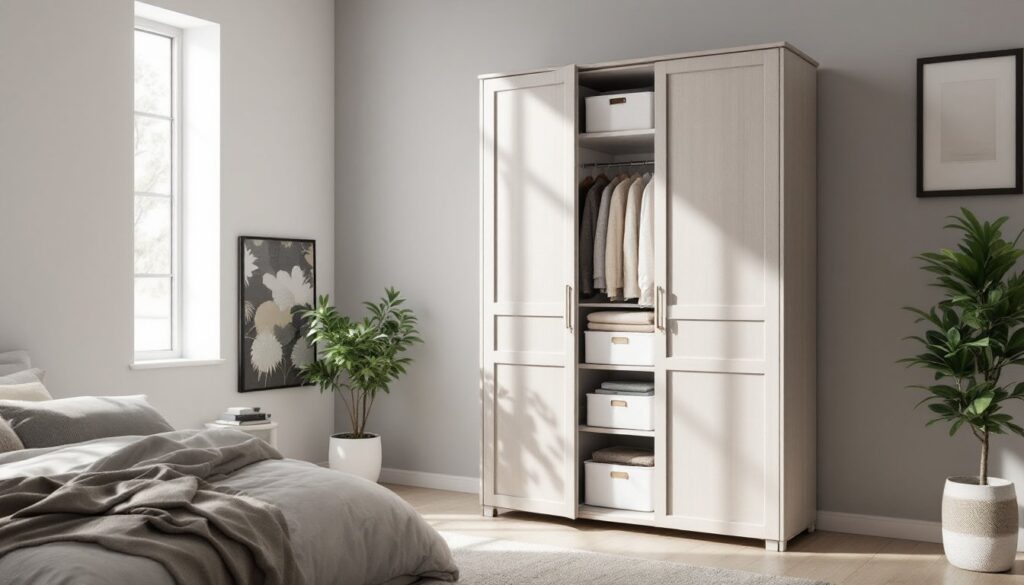
Freestanding cabinets are the go-to for renters and quick upgrades. They’re ready to use out of the box or after assembly, need no wall prep, and move if you relocate. A typical wardrobe cabinet or armoire (tall freestanding cabinet, usually 60–72 inches high, 30–48 inches wide) works well in master bedrooms. Freestanding cabinets can shift slightly over time on uneven floors, so leveling with shims is important if doors are to close smoothly.
Built-in cabinets are anchored directly to studs and feel like part of the room. They’re ideal if you own your home and plan to stay. Built-ins require wall framing, fastening to studs, and sometimes drywall patching afterward. The upside: they don’t tip, they use corner and wall space perfectly, and they often add home value. Built-ins also require more skill and tools, sometimes a permit, and are permanent, you’ll remove studs to take them out.
Common Cabinet Styles and Configurations
Panel cabinets have solid or veneered wood faces and a frame around the perimeter. They’re durable, hide gaps well, and suit traditional or transitional bedrooms. Shaker-style cabinets (flat-panel doors with a simple border frame) work in farmhouse or modern spaces and cost less than detailed carved styles.
Sliding door cabinets are smart for tight spaces, sliding panels don’t swing out and eat floor space like hinged doors. They work especially well in narrow rooms or when the cabinet sits next to a bed.
Open shelving configurations (no door) work for display but don’t hide clutter, good for storing books, plants, or decorative items you want visible, but not for a clean-bedroom look. Many homeowners mix doors on lower sections with open shelves above.
Depth matters: standard cabinets are 12–14 inches deep for lightweight items, 18–20 inches for heavier clothes and linens. Width ranges from 24 to 48 inches: height from 30 inches (short cabinet/dresser height) to 84 inches (floor-to-ceiling). Check doorways and hallways during purchase, large cabinets can’t navigate tight stairwells.
Design Considerations for Bedroom Storage
Finish and material affect style and durability. Solid wood cabinets (pine, oak, maple) are sturdy and refinishable, but cost more and need stain or paint maintenance. Plywood with veneer offers durability at lower cost and takes paint or stain well. Particleboard (common in budget models) is lightweight and affordable but less durable, avoid if the cabinet will hold heavy items or humidity is high.
Color should complement your bedroom palette. White or light gray cabinets brighten small spaces and work in modern, farmhouse, or coastal themes. Natural wood (honey, walnut) suits transitional and traditional styles. Bold colors (navy, sage, charcoal) add personality but limit future décor changes. Paint-grade wood accepts any color: stained wood requires refinishing to change, which is labor-intensive.
Door style influences the look. Flat-panel or slab doors feel modern and are easy to clean. Raised-panel or shaker doors suggest traditional style. Glass doors on upper cabinets display items and lighten visual weight, good for accent pieces or books. Mixed doors (solid lower, glass upper) strike a balance.
Interior organization matters as much as the exterior. Adjustable shelves let you change configurations as needs shift, critical if storing mixed items like clothes, shoes, and linens. Shelves should support 25–50 lbs per linear foot depending on material: cheap particle shelves sag under weight. Look for cabinets with at least 3 adjustable shelves per section. Hanging rods (if the cabinet has enough depth) hold coats or dresses without folding. Drawers add cost but keep small items (scarves, accessories, jewelry) organized and hidden. A cabinet with both shelves and a drawer or two offers flexibility.
Installation and DIY Tips for Cabinet Setup
Before buying, measure your space carefully: width, height, depth, and note any baseboards, trim, outlets, or heating vents. Test the path from your front door to the bedroom, move a box the cabinet’s size through hallways and doorways to confirm it fits.
For freestanding cabinets, assembly usually means attaching shelves, backing, and doors. Read instructions fully before opening the box: some manufacturers require a specific assembly order. Use a level (18–24 inches long) to ensure the cabinet is plumb and level side-to-side: uneven placement causes doors to swing shut or stick. Shim the base with hardwood shims if needed. Once level, secure the cabinet to wall studs with L-brackets or a safety strap (usually 1–2 fasteners per side, 16 inches up from the base). This prevents tipping, especially in homes with kids or pets or if the cabinet will be stacked with weight.
For built-in installations, this enters advanced DIY territory. You’ll need to locate studs with a stud finder, cut and frame the opening if modifying the wall, and secure the cabinet’s frame to studs with 2.5-inch deck screws (into studs every 16 inches vertically). Expect to use shims and a level throughout. Fill gaps between cabinet and wall with caulk or trim. Doors often arrive unhanged: hanging cabinet doors requires patience with hinge adjustment screws, a quarter turn at a time until doors align flush and swing smoothly. If you’re unsure about weight-bearing walls or structural questions, consult a contractor or local building department.
Installation is simpler with a step-by-step DIY tutorial from platforms like Instructables, which often include photos and user feedback. Allow 2–4 hours for freestanding assembly: built-in work may take a full weekend.
Maximizing Your Storage Cabinet Space
Thoughtful interior layout makes a cabinet work harder. Group similar items: all shoes on one shelf, off-season clothes in labeled bins on another, linens stacked by type. Use shelf dividers (slim wood or metal bars) to keep stacks from toppling, especially useful for sweaters or jeans.
Drawer organizers and small bins prevent the bottom drawer from becoming a black hole. Sliding baskets on lower shelves work well for heavier items like blankets. For hanging items, a tension rod (removable, no tools) inside the cabinet creates a portable clothing rail if the cabinet is 18+ inches deep.
Labeling is your friend. A label maker or painter’s tape with a marker tells family members (and future you) what’s inside without opening doors. Rotate seasonal items: summer dresses up in spring, winter coats down in fall. Donate or sell items you haven’t used in a year, storage is valuable real estate.
For additional creative solutions, explore storage solutions specifically designed for small bedrooms, which offer strategies like vertical stacking, double-hanging clothing, and dual-purpose furniture that compounds cabinet efficiency. If your bedroom is tight, also consider corner spaces where narrow cabinets or shallow shelving units fit without eating the room. For overflow items, basement storage ideas provide seasonal or long-term storage that keeps your bedroom cabinet clear for everyday items.
Home organization expert strategies from sources like Real Simple’s organization guides emphasize that the best storage is the one you’ll actually use and maintain. A beautiful cabinet gathering dust defeats its purpose, ensure the interior layout matches your daily routine.